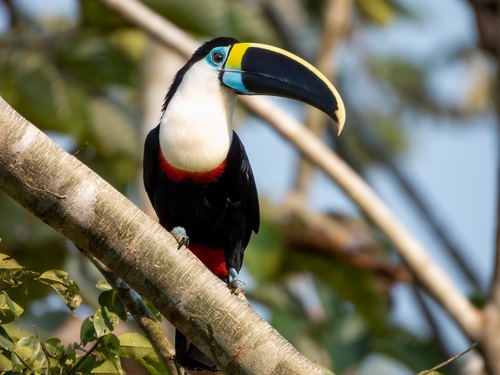
White-throated Toucan
Ramphastos tucanus
The White-throated Toucan is a flamboyant icon of the Amazon, known for its massive, colorful bill and its piercing, yelping call. A master of the canopy, this social bird brings a splash of tropical drama to any camera setup with its striking monochromatic feathers and vibrant facial skin.
Quick Identification
Size
Length of 50–61 cm (20–24 in); Weight ranging from 425–830 g (0.9–1.8 lbs)
Colors
Glossy black plumage with a brilliant white throat and breast. The bill is dark (black or reddish-brown) with a distinctive yellow stripe along the top ridge (culmen). Bare skin around the eyes is typically blue.
Key Features
- Massive bill with a bright yellow upper ridge
- Striking pure white throat and upper chest
- Bright blue patch of bare skin around each eye
- Large, heavy-bodied black bird
When You’ll See Them
Behavior
These birds are master foragers, using their long bills to reach fruits on thin branches that wouldn't support their weight. They are also known for a playful but competitive social structure, often engaging in 'bill-fencing' with flock mates to establish dominance or during courtship. Although they spend most of their time in the high canopy, they will descend to lower levels to drink or search for protein-rich snacks like insects and lizards.
EverydayEarth exclusive
Camera Tips
Baiting can be highly effective if you have a fixed platform or a wide, flat branch. Overripe bananas, papayas, and melons are irresistible to them. Place the fruit in a way that forces the bird to land in profile relative to the camera lens; this ensures you capture the full scale of the bill and the white throat markings. Because they are social, once one toucan discovers the fruit, the rest of the flock is likely to follow, so set your camera to 'Burst Mode' or 'Multi-Shot' to capture the group interaction.
If you are limited to lower mounting heights, look for a 'forest gap' or a location near a secluded water source. Toucans must drink and bathe, and they will occasionally drop to lower limbs or even the ground if a safe, quiet puddle is available. Use a fast trigger speed (0.3 seconds or less) because their movements, though somewhat jerky, are surprisingly fast when they are startled. Video mode is highly recommended for this species to record their unique 'yelping' vocalizations, which are a highlight of any wildlife recording.
Similar Species
Species that look similar or are commonly confused with White-throated Toucan.
Toco Toucan
Has a much brighter orange bill with a prominent black tip, and prefers more open habitats than the White-throated Toucan.
Channel-billed Toucan
Smaller in size with a black bill that often has a yellow or blue base, and usually features a yellow or orange patch on the breast below the white throat.
Frequently Asked Questions
Record White-throated Toucan at your habitat
Connect a camera to start building your own species record — AI identifies every visitor automatically.