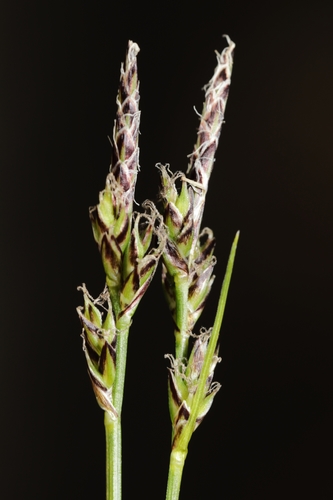
white-tinged sedge
Carex albicans
The white-tinged sedge is a graceful, low-growing native grass-like plant that illuminates the shadows of dry woodland floors. Its fine-textured foliage and early spring blooms make it a vital foundation for a healthy, wildlife-friendly backyard.
Quick Identification
Size
Height ranges from 15 to 40 cm (6 to 15 inches); clumps typically spread 20 to 30 cm (8 to 12 inches) wide.
Colors
Bright green to lime green foliage; flower spikes feature pale, translucent, or white-margined scales.
Key Features
- Dense, tufted growth habit (clumping)
- Fine, hair-like leaves less than 3mm wide
- Distinctive white-tinged scales on early spring flower spikes
- Prefers dry, shaded woodland conditions
When You’ll See Them
Behavior
White-tinged sedge is a cool-season perennial that brings life to the forest floor when most other plants are still dormant. It grows in tidy, fountain-like clumps rather than spreading via aggressive runners, making it a well-behaved neighbor in both wild and cultivated settings. During the early spring, it produces inconspicuous but structurally beautiful flower spikes that catch the light with their pale, papery edges.
In the ecosystem, this sedge acts as a vital 'living mulch,' protecting the soil from erosion and providing a soft habitat for ground-nesting insects and spiders. While it remains stationary, it responds dynamically to the seasons, often staying semi-evergreen in sheltered spots through the winter before pushing out vibrant new growth at the first sign of a spring thaw.
EverydayEarth exclusive
Camera Tips
To capture the delicate beauty of white-tinged sedge on a trail camera, you need to think small and low. Since this plant only reaches about a foot in height, mount your camera on a short stake or a ground-level 'tortoise' mount. Aiming the lens slightly upward from a height of 4 to 6 inches will give the sedge a majestic, towering appearance and highlight the translucent quality of the white-tinged scales on the seed heads.
Timing is everything for this species. Set your camera to take high-resolution stills or short video clips during the 'golden hours' of shortly after sunrise or just before sunset. The low-angle sunlight will illuminate the fine, hair-like textures of the leaves and make the white margins of the flowers glow against the darker forest floor. If your camera has a macro or close-focus setting, place it within 2 or 3 feet of a healthy clump for the best detail.
Because white-tinged sedge is a favorite foraging spot for small birds and mammals, use it as a 'stage' for your wildlife photography. Position the camera to overlook a patch of sedge near a fallen log or water source. You are likely to capture Juncos, Sparrows, or even Chipmunks darting through the foliage. The movement of the fine leaves in the wind can sometimes trigger PIR sensors, so you may need to slightly reduce the sensitivity of your camera if it's a particularly breezy day.
For a unique perspective, try a time-lapse setting during the spring. Setting your camera to take one photo every hour during the day for two weeks in April will allow you to see the rapid development of the flower spikes. This provides a fascinating look at the 'hidden' life of the forest floor that human observers rarely get to see in real-time.
Similar Species
Species that look similar or are commonly confused with white-tinged sedge.
Frequently Asked Questions
Record white-tinged sedge at your habitat
Connect a camera to start building your own species record — AI identifies every visitor automatically.