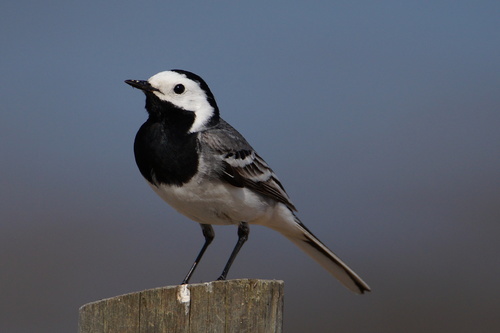
White Wagtail
Motacilla alba
With its dapper tuxedo-like plumage and a tail that never stops moving, the White Wagtail is the most charismatic visitor to any backyard. This energetic insect-hunter is a master of the 'run-and-grab,' turning your patio or lawn into its personal hunting ground.
Quick Identification
Size
Length: 16.5–19 cm (6.5–7.5 in); Wingspan: 25–30 cm (10–12 in); Weight: 18–25 g (0.6–0.9 oz)
Colors
A striking monochromatic palette of black, white, and grey. Males feature a solid black crown and bib with a white forehead and cheeks; females are similar but often show more grey on the crown and a less defined bib.
Key Features
- Long black-and-white tail that wags up and down constantly
- Bold black breast-patch (bib) and white face
- Distinctive undulating flight pattern
- Slender, elegant build with thin black legs
When You’ll See Them
Behavior
In social settings, they can be quite territorial during the breeding season, often seen chasing away rivals with a sharp 'chissick' call. However, during the winter months, they frequently gather in large, communal roosts for warmth, sometimes choosing trees in busy city centers or large industrial buildings. Their relationship with humans is generally peaceful; they are common sights on garden lawns, parking lots, and paved paths where they forage for food disturbed by human activity.
EverydayEarth exclusive
Camera Tips
To capture the perfect shot of a White Wagtail, camera placement is everything. Since these birds spend the vast majority of their time on the ground, you should mount your camera very low—ideally no more than 6 to 12 inches off the ground. Aim the lens across a flat, open surface like a short-cut lawn, a stone patio, or the edge of a driveway. Because they move with such rapid, jerky motions, ensure your camera's trigger speed is set to its fastest possible setting (0.2s or less) and use a high-speed 'burst' mode to catch that iconic tail wag in mid-motion without blur.
Water is the ultimate lure for this species. A shallow birdbath with a solar-powered dripper or a small backyard pond with a flat, stony edge will act as a magnet. Position your camera to face the spot where the water meets the land. White Wagtails love to 'patrol' the shoreline for emerging insects, and the reflective surface of the water adds a beautiful aesthetic to your AI-captured photos. Avoid placing cameras in tall grass, as the wagtail's small stature means they'll easily get lost in the vegetation; they prefer 'runways' where they can see predators coming.
In terms of lighting and settings, the early morning light provides the best contrast for their black and white plumage without washing out the highlights. If your camera allows for manual adjustments, a high shutter speed is your best friend. During the winter, if you live in a region where they stay year-round, look for rooftops or paved areas that retain heat. Insects will often congregate there on sunny days, bringing the wagtails right into your camera's field of view. Using a wide-angle lens can also capture their interesting 'zigzag' running pattern as they hunt across your patio.
Similar Species
Species that look similar or are commonly confused with White Wagtail.
Frequently Asked Questions
Record White Wagtail at your habitat
Connect a camera to start building your own species record — AI identifies every visitor automatically.