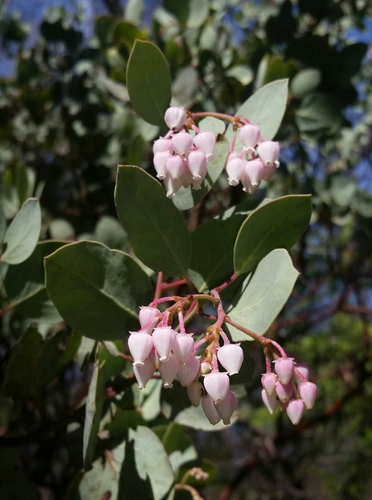
Whiteleaf Manzanita
Arctostaphylos viscida
With its iconic mahogany-red bark and silver-white leaves, the Whiteleaf Manzanita is a sculptural masterpiece of the Western landscape. This hardy shrub is a vital winter lifeline for hummingbirds and a symbol of resilience in fire-prone ecosystems.
Quick Identification
Size
1 to 5 meters (3 to 16 feet) in height; often forms a rounded or spreading shrub of equal width.
Colors
Deep mahogany-red smooth bark; pale silver-green to glaucous white leaves; white to light pink flowers; dark brown berries.
Key Features
- Smooth, dark red-mahogany bark that peels in summer
- Sticky, glandular hairs on the flower stalks and young stems
- Pale, glaucous (waxy) white-green leaves held vertically
- Clusters of nodding, urn-shaped white or pink flowers
When You’ll See Them
Geographic range
Where Does the Whiteleaf Manzanita Live?
The Whiteleaf Manzanita is a quintessential resident of the Western United States, with its native range concentrated heavily in California and southern Oregon. It is most commonly found throughout the Sierra Nevada foothills, the North Coast Ranges, and the Klamath Mountains. In these regions, it often forms dense, nearly impenetrable thickets known as manzanita barrens, thriving in the Mediterranean climate of hot, dry summers and cool, wet winters.
Basemap © OpenStreetMap contributors
Behavior
During the winter months, when most other plants are dormant, the Whiteleaf Manzanita bursts into bloom. This early flowering strategy makes it one of the most important 'bridge' species for pollinators, providing nectar when food is otherwise scarce. Its stiff, upright leaves are an adaptation to the intense sun; by standing vertically, they reduce the surface area exposed to the direct midday heat, helping the plant conserve water in arid environments.
EverydayEarth exclusive
Camera Tips
Capturing the Whiteleaf Manzanita on an AI-powered camera is less about catching the plant's movement and more about documenting the incredible diversity of wildlife it attracts. Because this species is one of the earliest bloomers in the Western US, it is a hotspot for Anna’s Hummingbirds and early-season bumblebees. To capture these fast-moving visitors, mount your camera on a tripod or nearby branch approximately 3-4 feet off the ground, aimed directly at a dense cluster of flowers. Use a high shutter speed or 'Burst Mode' to freeze the action of hovering birds against the pale, waxy leaves.
Lighting is your best friend when photographing this species. The smooth, mahogany-red bark and the glaucous (white-waxy) leaves can look washed out in the harsh midday sun. Aim to capture images during the 'golden hours'—shortly after sunrise or just before sunset. The low-angle light highlights the sculptural, twisting nature of the branches and makes the white leaves appear to glow. If your camera has a time-lapse feature, consider setting it up during the peak blooming months of February and March to see the flowers gradually open and attract a rotating cast of pollinators.
In the late summer and autumn, the plant's focus shifts to fruit production. The 'little apples' (the literal translation of manzanita) attract larger mammals like gray foxes, coyotes, and black bears. For these larger subjects, place your camera lower to the ground, focused on the base of the shrub where fallen fruit accumulates. Ensure your PIR (passive infrared) sensor sensitivity is set to high, as the stiff, brittle branches of the manzanita do not move much in the wind, allowing you to detect the subtle movement of animals entering the thicket without getting 'false triggers' from swaying foliage.
Similar Species
Species that look similar or are commonly confused with Whiteleaf Manzanita.
Frequently Asked Questions
Record Whiteleaf Manzanita at your habitat
Connect a camera to start building your own species record — AI identifies every visitor automatically.