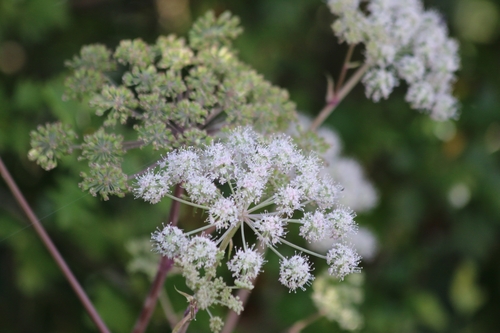
Wild Angelica
Angelica sylvestris
A towering architectural wonder of the wetlands, Wild Angelica is the ultimate summer skyscraper for pollinators. With its striking purple stems and umbrella-like flower heads, it transforms any damp corner into a buzzing hub of biodiversity.
Quick Identification
Size
Height: 1–2.5 m (3.3–8.2 ft); Spread: 0.5–1 m (1.6–3.3 ft)
Colors
Erect purplish-red or glaucous stems; dark green pinnate leaves; white to pale pink flowers
Key Features
- Tall, hollow, smooth purplish stems
- Rounded umbels of tiny white or pinkish flowers
- Large, inflated leaf sheaths at the base of stalks
- Finely toothed, celery-like leaflets
When You’ll See Them
Behavior
Wild Angelica is a structural powerhouse in the wild garden, acting as a biennial or short-lived perennial. In its first year, it remains a modest rosette of dark green foliage, but in its second year, it rapidly 'bolts,' sending up thick, hollow stems that can tower over a person. It is famously known as a 'pollinator magnet,' serving as a critical landing platform for a diverse array of insects including hoverflies, honeybees, and various beetles.
Unlike many plants that provide nectar in deep tubes, Wild Angelica offers its sugary rewards on flat, accessible discs (umbels). This makes it a social hub for the local ecosystem. While it doesn't move like an animal, its growth is incredibly fast during the spring months, and its skeletal remains provide essential winter cover for hibernating insects and seeds for small birds.
EverydayEarth exclusive
Camera Tips
To capture the true essence of Wild Angelica, treat it as a stage for wildlife drama. Because this plant grows so tall, don't leave your camera at ground level. Mount your AI-powered camera on a tripod or fence post at a height of 4 to 6 feet, angled slightly downward toward the flat-topped flower heads. This is where 90% of the action happens, as hoverflies, bees, and wasps land to feed.
If your camera supports time-lapse mode, Wild Angelica is a perfect subject. Set your device to take one photo every 2-4 hours starting in late May. You will capture the incredible 'bolting' process where the plant shoots from a foot tall to over six feet in just a matter of weeks. This creates a fascinating visual record of the plant’s lifecycle that most casual observers miss.
Pay close attention to the lighting. The white and pale pink blossoms can easily become 'overexposed' or blown out in harsh midday sun. For the best photos and AI recognition, position your camera so it faces away from the sun (Northern or Southern orientation). The 'golden hour' just before sunset is particularly magical for this species, as the low light catches the purple stems and makes the translucent flower heads appear to glow from within.
Lastly, keep the lens clear of swaying foliage. Wild Angelica stems are sturdy, but the large leaves can blow in the wind and trigger false motion alerts. Clear a small 'sightline' around your camera to ensure the AI stays focused on the insects visiting the flowers rather than the leaves moving in the breeze. If you are looking to capture specific visitors, late summer mornings are best, as insects are often slower and more sluggish while the dew is still on the petals.
Similar Species
Species that look similar or are commonly confused with Wild Angelica.
Frequently Asked Questions
Record Wild Angelica at your habitat
Connect a camera to start building your own species record — AI identifies every visitor automatically.