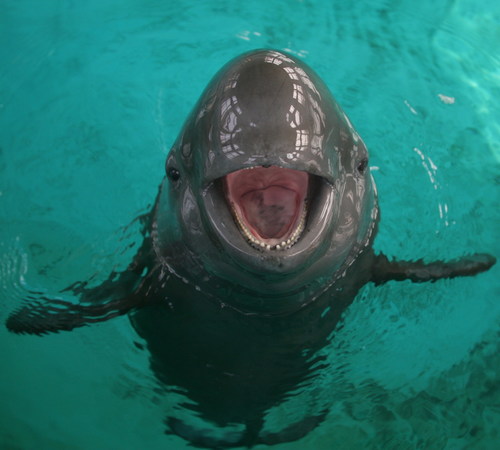
Yangtze Finless Porpoise
Neophocaena asiaeorientalis
The Yangtze Finless Porpoise is one of the few remaining freshwater cetaceans on Earth, known for its gentle 'smile' and incredible intelligence. This rare and endangered 'river pig' serves as a vital indicator of the health of Asia's longest river.
Quick Identification
Size
Length of 1.2–1.9 meters (4–6.2 feet); weight range of 30–72 kg (66–158 lbs).
Colors
Uniform steel gray or pale gray skin; turns significantly darker or black after death; no distinct color difference between sexes.
Key Features
- Complete lack of a dorsal fin
- Blunt, rounded head with a distinctive 'smiling' mouth line
- Small, dark eyes and no visible beak
- Prominent dorsal ridge with small bumps called tubercles
When You’ll See Them
Behavior
These porpoises use a sophisticated form of echolocation to navigate the silt-heavy, murky waters of the Yangtze River. Because they lack a dorsal fin, their swimming style is quite subtle; they break the surface with a gentle rolling motion that can be easy to miss if the water is choppy. They are known for their playful nature within their pods, often engaging in 'tail-slapping' or brief, energetic rolls at the surface.
EverydayEarth exclusive
Camera Tips
Since you cannot use traditional bait, your best 'lure' is the natural movement of fish. Look for areas where the current slows down, such as the downstream side of sandbars or near bridge pilings, as porpoises often linger in these spots to hunt. A fast trigger speed is non-negotiable; look for cameras with a 0.2-second response time or use 'Burst Mode' to ensure you don't just capture a splash or a ripple. A polarizing filter for your lens is highly recommended during the day to cut through the sun's reflection on the water's surface.
For those using underwater housing or specialized dock-mounted cameras, placement is key. Focus on the 'transition zones' where the shallow lake margins meet the deeper river channels. Ensure your camera is securely anchored against the river's current. If you are monitoring at night, standard infrared (IR) flashes can sometimes bounce off the water's surface, creating a 'white-out' effect. To avoid this, angle your camera slightly away from the direct reflection of the moon or nearby city lights. Focus on 'quiet zones' where boat traffic is limited, as the animals are more likely to linger and display natural social behaviors in these areas.
Similar Species
Species that look similar or are commonly confused with Yangtze Finless Porpoise.
Frequently Asked Questions
Record Yangtze Finless Porpoise at your habitat
Connect a camera to start building your own species record — AI identifies every visitor automatically.