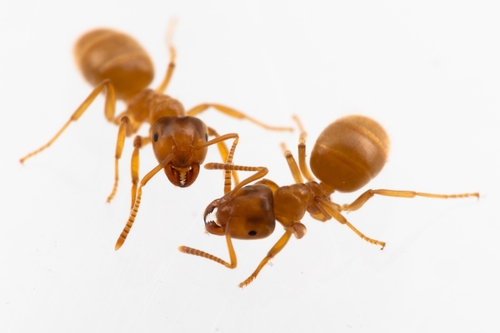
Yellow Meadow Ant
Lasius flavus
Meet the golden architects of the underworld. The Yellow Meadow Ant builds hidden empires beneath our feet, farming aphids and constructing sun-trapping mounds in our lawns.
Quick Identification
Size
Workers 2–4.5 mm (0.08–0.18 in); Queens 7–9 mm (0.28–0.35 in); Males 3–4 mm (0.12–0.16 in)
Colors
Workers are bright pale yellow to honey-orange; Queens are dark brown with yellow-orange undersides and legs
Key Features
- Distinctive yellow to amber coloration
- Small eyes compared to other Lasius species
- Builds soft soil mounds in turf
- Subterranean lifestyle with infrequent surface activity
When You’ll See Them
Geographic range
Where Does the Yellow Meadow Ant Live?
The Yellow Meadow Ant is native to the Palearctic region, spanning the temperate climates of Europe, Northern Africa, and much of Northern Asia. It is a staple of the landscape in countries like the United Kingdom, Germany, and France, where it thrives in ancient meadows and undisturbed garden turf. While historically grouped with similar-looking ants in North America, those populations are now considered a separate species, making Lasius flavus a true specialist of the Old World.
Basemap © OpenStreetMap contributors
Behavior
The Yellow Meadow Ant is one of nature's most dedicated subterranean farmers. Unlike their more adventurous cousins, the Black Garden Ants, these insects spend nearly their entire lives underground. They have evolved a fascinating symbiotic relationship with root-feeding aphids. The ants protect these aphids from predators and 'milk' them for honeydew, a sugary secretion that serves as the colony's primary food source. This allows the colony to thrive without the need to forage on the surface.
Because they rarely come above ground, their presence is usually signaled by the distinctive, soil-covered mounds they build in lawns and meadows. These mounds act as solar heaters, catching the sun's rays to incubate the ant larvae inside. While they are docile and pose no threat to humans, they are highly territorial against other ant colonies, often engaging in underground 'border wars' with neighboring nests.
EverydayEarth exclusive
Camera Tips
Capturing the Yellow Meadow Ant on camera requires a different approach than most backyard wildlife because they are almost exclusively subterranean. To see them in action, look for 'ant hills'—soft, earthen mounds in your lawn. Placing a camera with a macro lens at the very edge of a fresh mound after a light rain is your best bet, as workers often emerge to repair the structure. A low-angle, 'bug's-eye view' is essential here to capture their golden color against the dark soil.
The most dramatic footage occurs during the 'nuptial flight,' which typically happens on warm, humid afternoons in late July or August. During this window, thousands of winged queens and males pour out of the mounds simultaneously to take to the skies. Position your camera on a tripod facing the peak of a mound during these humid days. Use a high frame rate if possible, as the takeoff happens very quickly.
For those using AI-powered trail cameras, the challenge is the small size of the subjects. Since these ants don't typically visit traditional sugar baits on the surface, you can try to gently pull back a small piece of turf near a mound to reveal the tunnels, set your camera to a 1:1 macro focus, and record for a few minutes before replacing the grass. Use external LED lighting to highlight their translucent yellow bodies, which can look almost like amber when backlit.
Similar Species
Species that look similar or are commonly confused with Yellow Meadow Ant.
Frequently Asked Questions
Record Yellow Meadow Ant at your habitat
Connect a camera to start building your own species record — AI identifies every visitor automatically.