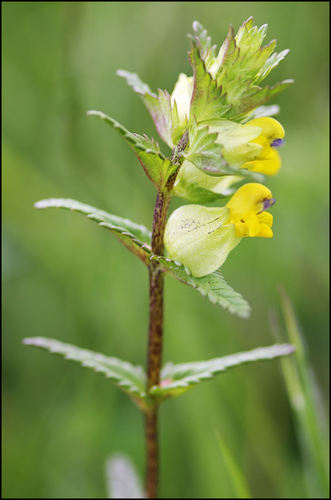
Yellow Rattle
Rhinanthus minor
Known as the 'Meadow Maker,' Yellow Rattle is the secret weapon for any wildflower enthusiast. This clever little plant suppresses aggressive grasses, paving the way for a vibrant, diverse backyard ecosystem.
Quick Identification
Size
Height ranges from 10 to 50 cm (4 to 20 inches); seed pods are approximately 1 cm (0.4 inches) wide.
Colors
Bright lemon-yellow flowers; serrated green leaves often tinged with purple or bronze; pale green inflated seed calyxes that turn papery brown.
Key Features
- Tubular yellow flowers with a hooded upper lip
- Opposite, stalkless, sharply-toothed leaves
- Large, bladder-like seed pods that rattle when dry
- Square-ish stems often decorated with black or purple spots
When You’ll See Them
Behavior
Yellow Rattle is a fascinating 'hemiparasitic' plant, meaning that while it creates energy through photosynthesis, it survives primarily by tapping into the root systems of neighboring grasses. By siphoning nutrients and water from aggressive grasses, it naturally suppresses their growth, which prevents any one species from dominating a meadow. This unique behavior makes it a hero for biodiversity, as it creates the necessary physical space for less competitive wildflowers to take root and bloom.
As an annual plant, its entire life cycle is completed in a single season. It germinates in the cool soil of early spring, flowers in mid-summer, and by late July or August, the plant begins to wither and turn a brittle, papery brown. This is when the characteristic 'rattle' occurs; the seeds break loose inside their dried pods, making a distinct sound when the wind blows or when animals pass through the meadow, helping the plant broadcast its seeds for the following year.
EverydayEarth exclusive
Camera Tips
Capturing the life of Yellow Rattle requires a different approach than fast-moving animals. Because this plant is a magnet for bumblebees and butterflies, position your camera on a tripod at a low 'worm’s-eye' view, roughly 10-15 inches from the ground. Use a macro lens or your camera’s close-up setting to focus on the intricate 'hooded' shape of the yellow flowers. Since the plant is stationary, this is the perfect opportunity to experiment with time-lapse photography, capturing the slow inflation of the seed pods over several weeks of the summer.
For the best lighting, aim for the 'golden hours' of early morning or late afternoon when the sun highlights the translucent nature of the bladder-like calyx. If your camera is motion-activated, set the sensitivity to high to catch the tiny movements of visiting pollinators. Avoid placing the camera in very tall, thick grass that might obscure the plant; instead, find a patch where the Yellow Rattle has already started to thin out the surrounding vegetation, providing a clear line of sight to the stem.
In late summer, switch your focus to capturing the 'rattling' stage. You can use a camera with a high-quality microphone to record the sound of the seeds as the wind passes through the meadow. If you are using a trail camera, ensure it is anchored firmly to a heavy stake, as the swaying of nearby tall grass can trigger hundreds of 'false' photos. Clearing a small 6-inch perimeter of grass around the specific plant you are filming can help prevent these triggers while keeping the focus on the Yellow Rattle’s unique structure.
Similar Species
Species that look similar or are commonly confused with Yellow Rattle.
Frequently Asked Questions
Record Yellow Rattle at your habitat
Connect a camera to start building your own species record — AI identifies every visitor automatically.