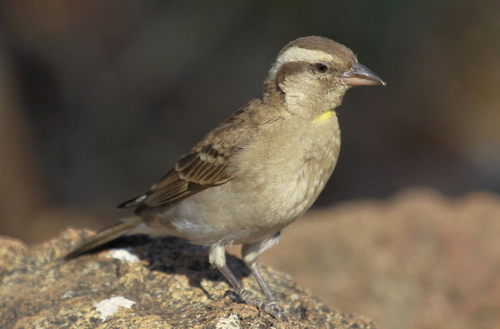
Yellow-throated Bush Sparrow
Gymnoris superciliaris
A subtle resident of the African woodland, the Yellow-throated Bush Sparrow is a master of camouflage with a hidden splash of gold. Often found in quiet gardens, this charming cavity-nester is a rewarding find for any backyard birdwatcher.
Quick Identification
Size
Length: 15–16 cm (6 inches); Weight: 22–30 g (0.8–1.1 oz)
Colors
Brownish-grey upperparts with subtle dark streaking; pale grey underparts; diagnostic yellow spot on the lower throat; broad, pale cream eyebrow (supercilium).
Key Features
- Tiny yellow patch on the throat
- Prominent pale cream eyebrow
- Strong, conical finch-like bill
- White-tipped tail feathers visible in flight
When You’ll See Them
Behavior
The Yellow-throated Bush Sparrow is a social bird that is often found in small groups or mixed-species flocks, particularly outside of the breeding season. Unlike the more common House Sparrow, this species is somewhat shy and prefers the canopy of indigenous trees or the edges of woodlands. They are arboreal by nature but will frequently descend to the ground to hop about in search of fallen seeds and insects.
One of their most interesting traits is their nesting habit; they are secondary cavity nesters. Instead of building messy nests in bushes, they seek out abandoned holes made by woodpeckers or barbets in dead trees. In suburban environments, they are peaceful visitors that rarely show aggression toward other species, making them a delightful addition to a quiet garden ecosystem.
EverydayEarth exclusive
Camera Tips
To capture the best footage of a Yellow-throated Bush Sparrow, focus your efforts on their nesting sites. Because they utilize tree cavities, placing a camera on a nearby branch or a tripod aimed at an old barbet hole or a specialized bird box is your best bet. Position the camera roughly 2 to 3 meters (6-10 feet) away to ensure the motion sensor triggers as the bird approaches the entrance, and use a fast shutter speed to catch the rapid movement of their wings.
Water is a massive draw for this species, especially in drier savanna climates. A shallow birdbath or a slow-dripping water feature will attract them for daily bathing and drinking. For the most professional-looking shots, set your camera at 'bird-eye level'—this means mounting it low if you have a ground-level pond or at the rim height of a pedestal birdbath. This perspective provides a much more intimate view of the bird’s facial features and that elusive yellow throat spot.
If you are using a feeder to lure them into your camera’s field of view, opt for a platform feeder rather than a hanging tube. These sparrows prefer a stable surface where they can hop and scan their surroundings. Use a mix of small grains like millet or crushed sunflower seeds. Since they are also insectivores, offering dried mealworms in a shallow dish can keep them in front of the lens for much longer than seeds alone.
Lighting is the biggest challenge when photographing this species. Their namesake yellow throat patch is often hidden in shadows or looks like a pale smudge in harsh light. Try to position your camera so the morning sun is behind the lens, illuminating the bird's front. If your camera allows for custom settings, a slight increase in saturation can help that small splash of yellow pop against their otherwise muted grey and brown plumage.
Similar Species
Species that look similar or are commonly confused with Yellow-throated Bush Sparrow.
Frequently Asked Questions
Record Yellow-throated Bush Sparrow at your habitat
Connect a camera to start building your own species record — AI identifies every visitor automatically.