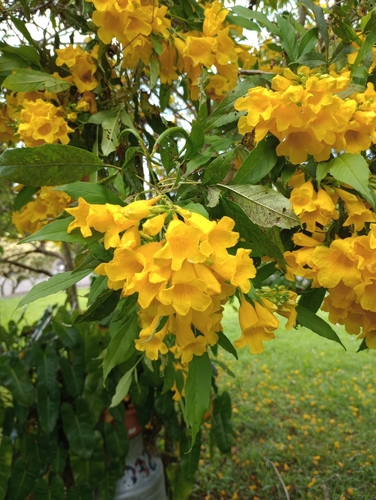
yellow trumpet flower
Tecoma stans
A vibrant explosion of golden blooms, the Yellow Trumpet Flower is a high-energy nectar hub for hummingbirds and butterflies. This hardy, sun-loving shrub turns any backyard into a bustling sanctuary for pollinators.
Quick Identification
Size
A fast-growing shrub or small tree reaching 10-25 feet (3-7.5 meters) in height with a spread of 10-20 feet (3-6 meters).
Colors
Brilliant golden-yellow flowers with faint reddish lines in the throat; bright green, serrated foliage.
Key Features
- Clusters of bright yellow trumpet-shaped blooms
- Sharply toothed (serrated) compound leaves with 5-13 leaflets
- Long, slender tan-colored seed pods (4-8 inches)
- Multi-stemmed shrubby or small tree-like growth habit
When You’ll See Them
Behavior
Tecoma stans, commonly known as Yellow Bells, is a vigorous perennial that acts as a focal point for backyard biodiversity. While it remains stationary, its biological "behavior" is defined by its prolific blooming cycles and its role as a high-traffic nectar station. It is a heliophilic species, meaning it seeks maximum sunlight to fuel its rapid growth and dense floral displays. In suburban gardens, it often serves as a natural privacy screen that doubles as a wildlife corridor.
This plant is a specialist at attracting pollinators. It has evolved a symbiotic relationship with hummingbirds and bees; its tubular shape is perfectly designed for the long bills of birds and the probing tongues of insects. When the wind picks up, the plant's long seed pods rattle, eventually splitting to release hundreds of papery, winged seeds that can travel significant distances to colonize new areas.
EverydayEarth exclusive
Camera Tips
To capture the best footage of wildlife visiting your Yellow Trumpet Flower, position your AI-powered camera 4 to 6 feet away from a dense cluster of active blooms. Mounting the camera at a height of 4 to 5 feet is ideal, as this puts the lens at the perfect level to record hummingbirds as they hover and feed. Angle the camera slightly downward so the lens can peer into the upward-facing trumpet shapes, which helps the AI identify smaller insects like honeybees or butterflies that might otherwise be hidden by the petals.
Lighting is the most critical factor for this species. Since Yellow Trumpet Flowers thrive in intense sun, you must be careful with exposure. Avoid pointing the camera directly East or West to prevent the harsh morning or afternoon sun from washing out the brilliant yellow colors. A North-facing orientation is often best, providing consistent, indirect light that highlights the texture of the leaves and the vibrant hue of the flowers without creating deep, muddy shadows.
The real "action" on this plant happens during the golden hours of the morning, usually between 8:00 AM and 10:00 AM, when nectar production is at its peak. If your camera supports it, use a high-frame-rate setting (60fps or higher) to capture the incredible wing dynamics of visiting hummingbirds or the rapid movements of Sphinx moths. If you want to see the plant's growth, set up a time-lapse over a period of 48 hours after a heavy rain; you will see the blooms burst open in a spectacular display of botanical movement.
Finally, ensure your camera is mounted to a dedicated post or a heavy tripod rather than a branch of the plant itself. The Yellow Trumpet Flower has flexible, thin branches that sway significantly in even a light breeze. Mounting the camera on the plant will result in shaky footage and constant false-positive motion triggers. A steady, independent mount allows you to use the "Motion Zone" feature of your camera to focus specifically on the flower cluster and ignore the background swaying.
Similar Species
Species that look similar or are commonly confused with yellow trumpet flower.
Frequently Asked Questions
Record yellow trumpet flower at your habitat
Connect a camera to start building your own species record — AI identifies every visitor automatically.