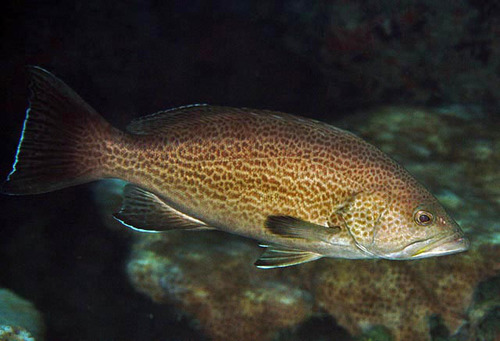
Yellowmouth Grouper
Mycteroperca interstitialis
A master of the Caribbean reefs, the Yellowmouth Grouper is easily identified by its golden 'smile' and intricate spotted patterns. This solitary predator is a favorite for underwater explorers and reef-cam enthusiasts alike.
Quick Identification
Size
Typically 16 to 24 inches (40-60 cm) in length, though they can grow up to 33 inches (84 cm); weight ranges from 5 to 22 lbs (2.3-10 kg).
Colors
Brownish-gray or tan body covered in small, closely spaced dark spots; distinctive bright yellow coloring at the corners of the mouth and along the fin edges.
Key Features
- Bright yellow coloration at the corners of the mouth and jaw
- Smoothly rounded tail margin, occasionally with small trailing filaments in older adults
- Bicolor juvenile phase with a dark upper half and stark white lower half
- Small, dark brownish spots across a lighter tan background
When You’ll See Them
Geographic range
Where Does the Yellowmouth Grouper Live?
The Yellowmouth Grouper is native to the tropical and subtropical waters of the Western Atlantic Ocean. Its primary range encompasses the Gulf of Mexico, the Florida Keys, and the Bahamas, extending through the entire Caribbean Sea. Pockets of the species are also found as far north as Bermuda and as far south as the eastern coast of Brazil.
Basemap © OpenStreetMap contributors
Behavior
The Yellowmouth Grouper is a sophisticated ambush predator that defines the rocky reef ecosystem. Unlike some of its more gregarious cousins, this species is largely solitary, patrolling its chosen territory with a mix of stealth and territorial dominance. They are protogynous hermaphrodites, a fascinating social structure where individuals begin their lives as females and eventually transition into males as they reach a larger size and higher social status.
When not hunting, they are known for their 'station-keeping' behavior, hovering almost motionless in the water column or resting near the seafloor. They are particularly wary of large predators but exhibit a curious nature toward divers and underwater camera equipment. They are most famous for their 'vacuum-feeding' method, where they open their massive jaws so quickly that it creates a pressure vacuum, sucking prey directly into their gullet.
EverydayEarth exclusive
Camera Tips
To successfully capture a Yellowmouth Grouper on an underwater camera, placement is paramount. These fish are highly 'structure-oriented,' meaning they rarely venture far from cover. Focus your camera on the interface between a sandy bottom and a coral head, or at the entrance of a prominent ledge. Aim the lens at a 45-degree angle toward the structure, as groupers often hover just above the substrate. If you are using a dock-mounted camera, look for areas with significant vertical relief like pilings or rock jetties.
While baiting is often regulated, you can attract their attention using visual lures. A small, shiny piece of metal or a plastic 'flash' hung in the current can pique the curiosity of a Yellowmouth Grouper from a distance. They are highly visual hunters and will often approach a moving object to investigate if it is a potential meal. For the best clarity, ensure your camera has a high-quality underwater housing and utilize an AI-trigger set to 'high sensitivity,' as their camouflage can sometimes fool standard motion sensors.
Lighting is your best friend when trying to highlight the 'yellow mouth' for which they are named. Because red and yellow light is absorbed quickly underwater, using an external underwater light source or capturing footage during the peak sun hours of 10 AM to 2 PM will help the yellow pigments pop. If your camera setup allows for time-lapse, set it to trigger every 30 seconds during the twilight hours of dawn and dusk, which are the species' primary hunting windows.
Similar Species
Species that look similar or are commonly confused with Yellowmouth Grouper.
Frequently Asked Questions
Record Yellowmouth Grouper at your habitat
Connect a camera to start building your own species record — AI identifies every visitor automatically.