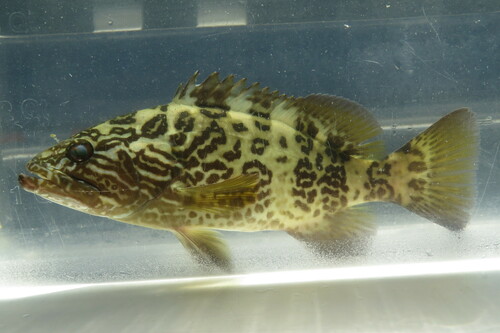
Gag Grouper
Mycteroperca microlepis
A master of disguise on the Atlantic reefs, the Gag Grouper is a powerful ambush predator known for its 'velvet' gray scales and clever hunting tactics.
Quick Identification
Size
Typically 60-90 cm (24-35 in), but can reach 145 cm (57 in) and weigh up to 36.5 kg (80 lbs).
Colors
Drab, mottled-gray body with darker 'box-shaped' spots; the belly of older males can turn a dark charcoal or black.
Key Features
- Mottled-gray body with box-shaped spots
- Square tail fin lacking streamer points
- Large mouth without yellow coloration at the corners
When You’ll See Them
Geographic range
Where Does the Gag Grouper Live?
The Gag Grouper is native to the warmer regions of the Western Atlantic Ocean. Its primary range extends from the coastal waters of North Carolina down through the Gulf of Mexico and the Caribbean, reaching as far south as Brazil. While they are most concentrated along the continental shelf of the United States and Mexico, they are occasionally spotted as far north as Massachusetts during warm summers.
Basemap © OpenStreetMap contributors
Behavior
Gag Grouper are highly successful ambush predators known for their solitary and territorial nature. Unlike many schooling fish, adult Gags prefer the solitude of rocky ledges, caves, and reef structures, where they wait patiently for prey to swim within striking distance. They are famous for their 'suction feeding' method, where they open their massive mouths rapidly to create a vacuum, pulling in unsuspecting prey whole.
Interestingly, this species is a protogynous hermaphrodite, meaning they begin their lives as females and the largest individuals eventually transition into males. This social structure is vital for their reproduction, as they migrate to offshore spawning grounds in late winter and spring. While generally wary of divers, they are curious enough to approach stationary objects, making them a fascinating subject for underwater observation.
EverydayEarth exclusive
Camera Tips
Capturing the Gag Grouper requires specialized underwater equipment, as they reside primarily in marine environments. For the best results, mount your camera on a weighted tripod or a fixed underwater structure near a 'live bottom'—areas with sponges, corals, and rocky crevices. Gags are territorial, so if you find a ledge with a large opening, there is a high probability a resident grouper is nearby.
Because Gags can be shy around movement, using a remote-triggered camera or an AI-powered unit that records only when motion is detected is ideal. If your camera setup allows for it, placing a mesh bait bag filled with oily fish (like sardines or mackerel) just out of the frame can lure them into view. Be sure to position the camera with the sun behind it to illuminate the fish's subtle gray patterns, which can otherwise disappear in the blue-green depths.
For settings, use a high frame rate (at least 60fps) to capture their lightning-fast strikes. If you are filming deeper than 30 feet, you will likely need underwater video lights to bring out the true colors of the fish, as red and orange light waves are filtered out by the water column. In shallow estuaries where juveniles live, wide-angle lenses are best for capturing their movement through seagrass.
Similar Species
Species that look similar or are commonly confused with Gag Grouper.
Frequently Asked Questions
Record Gag Grouper at your habitat
Connect a camera to start building your own species record — AI identifies every visitor automatically.