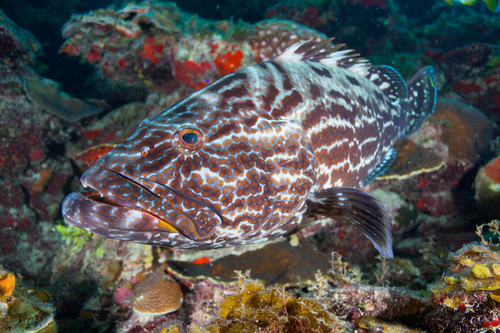
Black Grouper
Mycteroperca bonaci
A majestic and powerful predator of the Atlantic reefs, the Black Grouper is a master of disguise. Known for its boxy patterns and impressive size, this reef-dweller is a top prize for underwater photographers and nature enthusiasts alike.
Quick Identification
Size
Typically 60–100 cm (24–39 in) in length, but can grow up to 150 cm (59 in) and weigh as much as 100 kg (220 lbs).
Colors
Olive or gray body with dark, rectangular blotches forming a box-like pattern; fins have a narrow blue or white edge.
Key Features
- Distinctive rectangular dark blotches along the sides
- Large mouth with a lower jaw that protrudes past the upper jaw
- Truncated (square-cut) tail fin
- Brass-colored spots on the head and lower body
When You’ll See Them
Geographic range
Where Does the Black Grouper Live?
The Black Grouper is native to the coastal waters of the Western Atlantic Ocean, ranging from the northeastern United States down to southern Brazil. Its core population thrives in the tropical currents of the Caribbean Sea, the Gulf of Mexico, and the Florida Keys. While they occasionally wander as far north as Massachusetts during warm summer months, they are most consistently found in the coral-rich environments of the Bahamas and the West Indies.
Basemap © OpenStreetMap contributors
Behavior
The Black Grouper is a solitary and highly territorial ambush predator that spends much of its time hovering near the shadows of coral heads or within the structure of shipwrecks. As protogynous hermaphrodites, these fish begin their lives as females and may transition into males as they reach a larger size and older age. This unique social structure makes them particularly sensitive to fishing pressure, as the removal of the largest individuals can disrupt the breeding balance of a local population.
While generally wary of divers, they are curious creatures and will often maintain a safe distance while keeping a watchful eye on intruders. They are known for their 'homebody' nature, often occupying the same small patch of reef for years at a time. During the spawning season, they may travel to specific aggregation sites, but they quickly return to their home territories once the event is over.
EverydayEarth exclusive
Camera Tips
Capturing a Black Grouper on camera requires specialized underwater equipment, as these are marine fish. For those with 'backyard' access to saltwater docks or private piers, mounting an underwater trail camera or a GoPro in a waterproof housing to a pier piling is the most effective strategy. Aim the camera toward rocky structures or artificial reef balls where groupers like to hide. Positioning the lens at a slightly upward angle toward the surface light will help define their rectangular patterns and prevent the fish from blending into a dark seafloor.
Because Black Groupers are ambush predators, they are naturally attracted to areas with high concentrations of smaller prey fish. You can encourage them to linger in front of your lens by using a mesh bait bag filled with oily fish like sardines or mackerel. Secure the bag firmly to a stationary object so the grouper cannot drag it out of the frame. The scent will draw them in from the surrounding reef, though it may take 20-30 minutes for them to feel comfortable enough to approach the camera directly.
Optimal settings involve a fast shutter speed (at least 1/250s) to catch their sudden lunging strikes. If your camera is at a depth where light is limited, use a wide-angle lens to maximize light intake and ensure you capture the full scale of these large fish. Crepuscular hours—dawn and dusk—are the best times for activity, as this is when their 'dark box' camouflage is most effective against the dim light, making them feel bold enough to hunt in the open.
Similar Species
Species that look similar or are commonly confused with Black Grouper.
Frequently Asked Questions
Record Black Grouper at your habitat
Connect a camera to start building your own species record — AI identifies every visitor automatically.