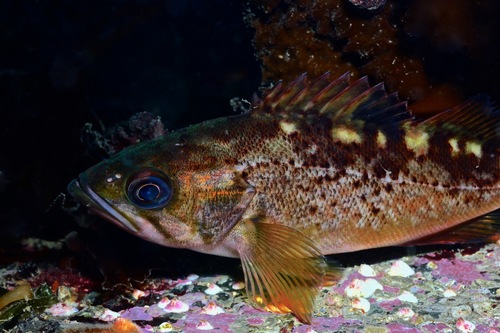
Yellowtail Rockfish
Sebastes flavidus
The bright, golden-tailed socialite of the Pacific kelp forests. Yellowtail Rockfish bring a splash of color and constant motion to underwater backyards from Alaska to California.
Quick Identification
Size
Typically 30-50 cm (12-20 inches), reaching up to 66 cm (26 inches); weighs up to 2.5 kg (5.5 lbs)
Colors
Olive-green to grayish-brown back with light-colored belly; bright yellow or yellowish-green tail and fins
Key Features
- Bright yellow or yellowish-green tail fin
- Olive-green to brassy body with dark speckles
- No prominent spines on the top of the head
- Streamlined, almond-shaped body for midwater swimming
When You’ll See Them
Behavior
Yellowtail Rockfish are highly social, schooling fish that differ from many of their bottom-dwelling relatives. While many rockfish species hug the seafloor, Yellowtails are "midwater" specialists, often found hovering in large, shimmering groups within the water column above rocky reefs or darting through the swaying fronds of kelp forests. They are known for their remarkable homing instinct, with individuals often returning to the exact same rock or reef year after year after migrating for spawning.
These fish are relatively long-lived, with some individuals reaching ages of 60 years or more. They are active hunters during the day, using their streamlined bodies to pursue small fish and crustaceans. Because they are curious and less skittish than other marine life, they are a favorite subject for underwater observers and divers. During the winter, they engage in internal fertilization, and females later release live, swimming larvae into the currents—a fascinating trait shared by the rockfish family.
EverydayEarth exclusive
Camera Tips
Capturing the Yellowtail Rockfish requires a specialized underwater setup, particularly if you are monitoring from a dock, pier, or a private boat mooring. Use a high-definition underwater camera or an action camera in a waterproof housing, mounted 5 to 12 feet below the surface. For the best results, orient the camera horizontally toward a known structure like a pier piling or a submerged rock ledge. These fish use these landmarks as congregating points, and a horizontal angle better captures the "schooling" effect and the vibrant yellow of their tail fins against the blue or green water.
To attract Yellowtail Rockfish to your camera's field of view, use a "chum pot" or a perforated PVC tube filled with frozen squid or sardine chunks. Unlike bottom-dwelling fish, Yellowtails feed in the midwater column, so suspend your bait bag at the same depth as your camera rather than letting it sink to the seafloor. The scent trail will draw them in from a distance. If your camera features AI detection, ensure it is set to a high sensitivity to account for the fluid, constant motion of fish, but try to mask out areas with heavy kelp surge to avoid thousands of false triggers from moving seaweed.
Lighting is your biggest challenge underwater. The best footage is usually captured within two hours of high noon when the sun is directly overhead, providing maximum natural light penetration. However, if you are filming at dawn or dusk (their peak feeding times), you may need an external underwater LED array. Position the lights at a 45-degree angle away from the lens to minimize "backscatter," which is the reflection of light off tiny particles in the water. In areas with high tidal flow, ensure your camera mount is heavily weighted or bolted to a structure to prevent the "seasick" look caused by current vibration.
Similar Species
Species that look similar or are commonly confused with Yellowtail Rockfish.
Olive Rockfish
Very similar in color but has light blotches on its back and a more elongated body than the Yellowtail.
Black Rockfish
Lacks the bright yellow fins and has a more rounded head with a darker, charcoal-colored body.
Blue Rockfish
Displays a distinct bluish-gray hue and has two dark stripes angling back from the eyes.
Frequently Asked Questions
Record Yellowtail Rockfish at your habitat
Connect a camera to start building your own species record — AI identifies every visitor automatically.