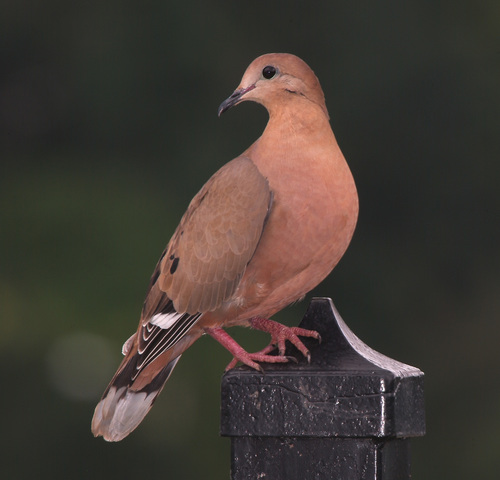
Zenaida Dove
Zenaida aurita
The Zenaida Dove is the soulful sound of the Caribbean, known for its gentle nature and beautiful cinnamon-hued plumage. As the national bird of Anguilla, this elegant visitor is a highlight for any backyard camera enthusiast.
Quick Identification
Size
28–30 cm (11–12 in) long; wingspan of 42–46 cm (16.5–18 in); weighs 120–170 g (4.2–6 oz)
Colors
Rich reddish-brown or cinnamon upperparts with grayish-pink underparts; iridescent violet-purple patches on the neck; black spots on wings and a black streak on the cheek.
Key Features
- White trailing edge on the inner wing feathers visible in flight
- Short, square-ended tail with white-tipped outer feathers
- Two distinct black spots or streaks on the side of the face
- Dull red legs and feet
When You’ll See Them
Behavior
The Zenaida Dove is a graceful, ground-foraging bird known for its calm demeanor and rhythmic, melancholy cooing. Unlike some of its more skittish relatives, this species often becomes quite tame in backyard environments, comfortably walking along patios and garden paths in search of fallen seeds. They are social birds, often seen in pairs or small family groups, though they can become quite territorial during the nesting season, with males performing elaborate bowing displays to ward off competitors.
When startled, the Zenaida Dove takes flight with a characteristic whistling sound produced by its wings, a trait shared with other members of its genus. They are largely sedentary but are strong fliers. In coastal areas, they are frequently seen sunbathing on the ground or taking dust baths to maintain their plumage. Their presence is often announced by their song—a series of deep, mournful 'coos' that are slightly faster and more forceful than those of the Mourning Dove.
EverydayEarth exclusive
Camera Tips
To successfully capture the Zenaida Dove on your backyard camera, focus your efforts on ground-level activity. These doves are quintessential ground feeders, so placing your AI-powered camera just 6 to 12 inches off the ground near a clear patch of soil or a low-profile feeding tray is ideal. Positioning the camera to face a slightly shaded area will help prevent the bright Caribbean sun from washing out the subtle iridescent violet patches on their necks, which are a highlight of their plumage.
The most effective lure for Zenaida Doves is a scattering of white proso millet, cracked corn, or sunflower hearts. Instead of a single pile, spread the seed in a 2-foot radius in front of the lens. This encourages the birds to walk and forage within the frame, giving the camera multiple angles to capture their distinct black cheek markings and the white edges of their tail feathers. If you have a birdbath, place your camera nearby; these doves are frequent drinkers and the sight of a dove splashing in shallow water makes for excellent video footage.
In terms of settings, use a high-trigger speed if possible. While they move gracefully, their take-offs are explosive and can appear as a blur if the shutter speed is too slow. Because they are most active during the 'golden hours' of early morning and late afternoon, ensure your camera is positioned to avoid direct lens flare from the rising or setting sun. During the spring months, keep the camera rolling for longer clips, as you are likely to capture interesting social behaviors like mutual preening or the male's rhythmic bowing display.
Similar Species
Species that look similar or are commonly confused with Zenaida Dove.
Mourning Dove
Has a longer, pointed tail and lacks the white trailing edge on the wing feathers seen on the Zenaida.
White-winged Dove
Features a much larger, bold white patch across the middle of the wing rather than just the trailing edge.
Eared Dove
Very similar in appearance but found mostly in South America; it has more spotting on the wings and a slightly different facial pattern.
Frequently Asked Questions
Record Zenaida Dove at your habitat
Connect a camera to start building your own species record — AI identifies every visitor automatically.