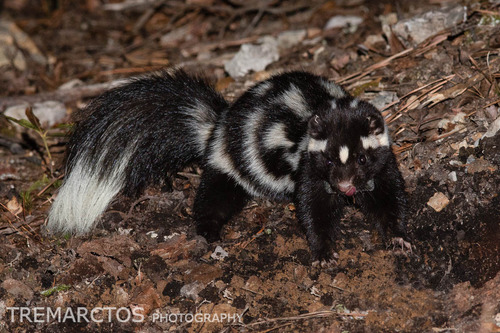
Alleghanian Spotted Skunk
Spilogale putorius
The Alleghanian Spotted Skunk is the acrobat of the skunk world. Known for its stunning spotted coat and its famous 'handstand' defense, this elusive nocturnal climber is a rare prize for any backyard camera enthusiast.
Quick Identification
Size
12 to 22 inches (30 to 55 cm) in total length; weighs 1 to 2.5 lbs (450 to 1,130 g)
Colors
Jet black fur with four to six broken white stripes that look like spots; white triangular patch on the forehead; tail often has a white tip
Key Features
- Distinctive pattern of broken white stripes and spots
- Smaller and more slender than the common Striped Skunk
- White spot on the forehead and in front of each ear
- Performs a front-paw 'handstand' when threatened
When You’ll See Them
Geographic range
Where Does the Alleghanian Spotted Skunk Live?
Native to the North American continent, the Alleghanian Spotted Skunk is primarily found throughout the eastern and central United States. Its core range extends from the Gulf Coast through the Appalachian Mountains and into the central plains, though its presence in the northern reaches of the U.S. and southern Canada has become increasingly rare. This species is a specialist of the 'edge' environment, preferring the transition zones where forests give way to meadows or rocky hillsides.
Basemap © OpenStreetMap contributors
Behavior
The Alleghanian Spotted Skunk is a far more agile and energetic creature than its larger, waddling relatives. Known for its climbing ability, this skunk easily scales trees and fence posts to hunt for food or evade ground-dwelling predators. They are strictly nocturnal, remaining hidden in burrows, hollow logs, or under old buildings during the day, emerging only after sunset to forage under the cover of darkness.
When confronted, the spotted skunk has a legendary defensive display. Before spraying its potent musk, it will stomp its feet and rise into a dramatic handstand, balancing on its front paws to appear larger and direct its scent glands toward the threat. While they are generally solitary animals, they are not strictly territorial and have been known to share dens with other skunks during extreme winter weather to conserve body heat.
EverydayEarth exclusive
Camera Tips
Capturing the Alleghanian Spotted Skunk on camera requires a bit more finesse than tracking the common striped skunk. Because these animals are significantly smaller—roughly the size of a large squirrel—it is vital to mount your camera low. A height of 6 to 10 inches off the ground, angled slightly upward, is ideal for catching their unique spotted patterns and facial markings. Look for 'micro-habitats' like the base of hollow trees, gaps in stone walls, or the crawl spaces beneath old sheds.
Since they are strictly nocturnal, your camera’s infrared (IR) flash performance is critical. A high-trigger speed is also recommended because spotted skunks are fast and erratic movers compared to the slow-paced striped skunk. To encourage them to linger in front of the lens, use a strong-smelling lure. Canned sardines in oil, wet cat food, or a smear of peanut butter on a log work exceptionally well. For a less messy option, a cotton ball soaked in anise oil or a commercial skunk lure can trigger their intense curiosity.
Don't forget to look up! Because this species is a proficient climber, placing a camera facing a leaning log or a low, horizontal branch in a wooded area can result in unique 'action' shots of them navigating the canopy. In the winter months, they are less active but still emerge on warmer nights, so keep your cameras running year-round. Given their status as a species of conservation concern, documenting a sighting on your property can provide valuable data for local wildlife biologists.
Similar Species
Species that look similar or are commonly confused with Alleghanian Spotted Skunk.
Frequently Asked Questions
Record Alleghanian Spotted Skunk at your habitat
Connect a camera to start building your own species record — AI identifies every visitor automatically.