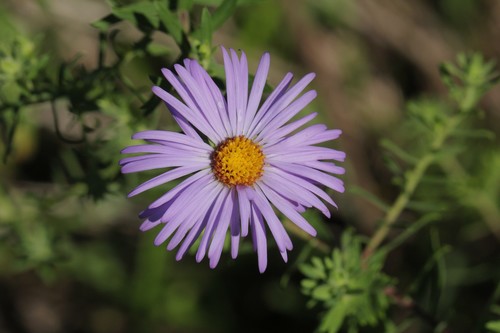
Aromatic Aster
Symphyotrichum oblongifolium
A hardy autumn gem that transforms dry landscapes into a sea of purple. Known for its shrub-like shape and fragrant foliage, it is the ultimate late-season nectar bar for butterflies and bees.
Quick Identification
Size
Height of 10–80 cm (4–32 inches); spreads to form a bushy mound 30–90 cm (1–3 feet) wide.
Colors
Deep purple to lavender-blue ray florets with bright yellow center discs that transition to reddish-purple after pollination.
Key Features
- Strong balsam-like scent when leaves are crushed
- Dense, mounded growth habit resembling a small shrub
- Stiff, oblong leaves with a slightly hairy texture
- Prolific late-season blooms measuring about 1 inch across
When You’ll See Them
Geographic range
Where Does the Aromatic Aster Live?
Aromatic Aster is native to the North American continent, primarily found throughout the central and eastern United States. Its range fans out from the rocky hillsides of Pennsylvania and the Appalachian foothills through the Great Plains, reaching as far west as the Rocky Mountains and south into Texas and Alabama. This resilient wildflower is a staple of the American prairie and limestone glades, thriving in open, sun-drenched landscapes across the heart of the country.
Basemap © OpenStreetMap contributors
Behavior
Aromatic Aster is a late-season specialist, often waiting until other summer wildflowers have faded before beginning its spectacular bloom cycle in late August. Unlike many taller asters that become leggy and fall over, this species maintains a tight, mounded shape, making it look almost like a manicured shrub in the wild. It is highly resilient, utilizing a deep root system to withstand drought and poor soil conditions.
As one of the final nectar sources available in the autumn, it acts as a critical hub for social interaction among pollinators. You will often see a frenzy of activity around the flowers, where various species of bees and late-migrating butterflies congregate. Humans find it particularly agreeable because its foliage releases a refreshing, minty-pine fragrance when touched or stepped on, and it is notably more deer-resistant than its cousins.
EverydayEarth exclusive
Camera Tips
To capture the best images of Aromatic Aster, position your camera at a mid-level height, approximately 18 to 24 inches off the ground. Using a wide-angle lens can help showcase the plant's unique mounded 'shrub-like' shape, while a macro setting is essential for capturing the intricate details of the yellow-and-purple flower heads. Because this plant is a pollinator magnet, the best time for a trail camera to be active is during the peak heat of the day when butterflies and bees are most mobile.
Since the Aromatic Aster blooms late in the season, it provides a rare opportunity to photograph vibrant color against the backdrop of falling autumn leaves. Try to angle your camera so it faces North or South; this prevents direct lens flare from the lower autumn sun while providing side-lighting that highlights the texture of the hairy stems and oblong leaves. If your camera has a time-lapse mode, set it to trigger every 15 minutes during October to watch the dramatic transformation as the entire mound turns from green to solid purple.
For those using AI-powered cameras to detect wildlife, place the camera within 3 feet of a healthy cluster. The movement of the flowers in the wind can sometimes trigger false positives, so if your camera settings allow, increase the motion sensitivity threshold or use a 'zone' setting that focuses on the flower heads where insects land. In late September, you are likely to capture migratory Monarch butterflies fueling up on nectar, making this the ideal 'bait' for insect photography without needing artificial lures.
Similar Species
Species that look similar or are commonly confused with Aromatic Aster.
Frequently Asked Questions
Record Aromatic Aster at your habitat
Connect a camera to start building your own species record — AI identifies every visitor automatically.