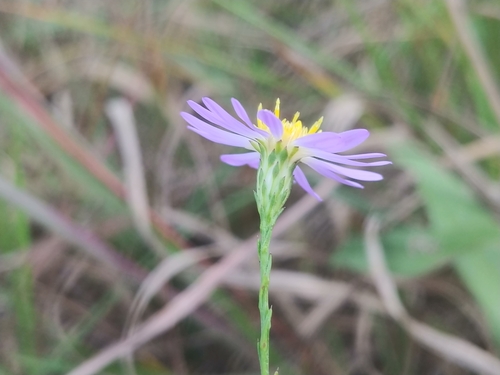
sky blue aster
Symphyotrichum oolentangiense
A late-season masterpiece, the sky blue aster provides a stunning wash of azure to the autumn landscape. It is a vital sanctuary for migrating butterflies and a hardy survivor of the dry prairie.
Quick Identification
Size
Height ranges from 1–3 feet (30–90 cm); flower heads are approximately 0.5–1 inch (1.2–2.5 cm) wide.
Colors
Brilliant sky-blue to violet-blue rays with central discs that transition from bright yellow to reddish-purple.
Key Features
- Rough, sandpapery texture on leaves and stems
- Basal leaves are heart-shaped with long petioles
- Flower centers change from yellow to rose-purple after pollination
- Arranged in loose, open clusters at the top of the plant
When You’ll See Them
Behavior
The sky blue aster is a late-season specialist, waiting until the heat of summer begins to wane before putting on its floral display. It plays a critical role in the local ecosystem as a high-quality nectar source for late-season pollinators. Unlike some more aggressive aster species, it maintains a tidy, clump-forming growth habit that makes it a favorite for native plant enthusiasts and backyard gardeners alike.
As the flowers age, the central discs undergo a color shift from yellow to a deep magenta or purple. This isn't just for show; it serves as a signal to pollinators that the flower's nectar supply has been depleted, directing bees and butterflies toward younger, more productive blooms. In the winter, the dried seed heads provide a small but important food source for songbirds that stay through the colder months.
EverydayEarth exclusive
Camera Tips
To capture the sky blue aster effectively on a backyard camera, placement is everything. Since this plant grows between 1 and 3 feet tall, mount your camera on a low stake roughly 2 to 3 feet away from the main blooming cluster. Angle the lens slightly upward to capture the blue of the petals against the sky, which emphasizes the plant's common name. Use a macro setting or a close-focus lens if your camera supports it, as the intricate detail of the yellow-to-purple centers is one of its most striking features.
Because the main 'action' for this species involves pollinators, set your camera to a high-speed trigger or 'burst mode.' The blue petals are a magnet for migrating Monarch butterflies and various species of native bumblebees. To capture these fast-moving visitors, ensure your camera is positioned where it will receive bright, direct sunlight; this allows for a faster shutter speed, which reduces motion blur from beating wings. Early morning light is particularly flattering, as it highlights the subtle violet hues of the rays without the harsh shadows of midday.
If you are using a trail camera for a time-lapse, start recording in late July. You can document the transition from green, nondescript foliage to the explosive blue bloom in late September. This species is often overlooked until it flowers, so a season-long time-lapse provides a fascinating look at its development. Avoid using heavy baits or lures that might attract large mammals that could trample the delicate stems; instead, let the natural nectar be the primary draw for the 'wildlife' you're aiming to film.
Similar Species
Species that look similar or are commonly confused with sky blue aster.
Smooth Blue Aster
Features smooth, hairless leaves that clasp the stem, unlike the rough, petioled leaves of the sky blue aster.
New England Aster
Much larger and bushier, with deeper purple flowers and hairy stems that feel sticky to the touch.
Aromatic Aster
Grows in a more compact, mounded shape and releases a distinct balsam-like scent when the leaves are crushed.
Frequently Asked Questions
Record sky blue aster at your habitat
Connect a camera to start building your own species record — AI identifies every visitor automatically.