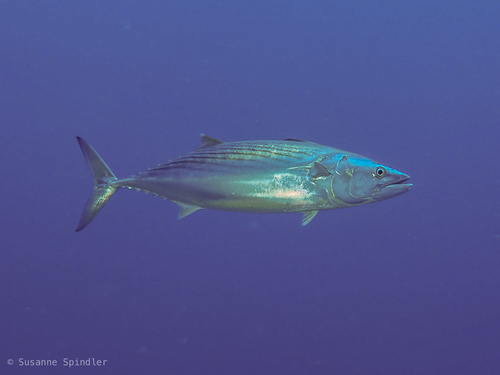
Atlantic Bonito
Sarda sarda
A high-speed predator of the Atlantic, the Bonito is a shimmering bullet of the sea known for its aggressive hunting and beautiful striped markings. Whether you are a coastal observer or an underwater photographer, witnessing a Bonito 'blitz' is one of nature's most electric spectacles.
Quick Identification
Size
Typical length of 50–70 cm (20–28 in) and weight of 2–5 kg (4–11 lbs), though record specimens reach 90 cm and 9 kg.
Colors
Steel-blue iridescent back with 7-12 dark, slightly slanted longitudinal stripes; silvery-white belly and lower sides.
Key Features
- 7 to 12 dark slanted stripes on the upper back
- Streamlined, torpedo-shaped body with a deeply forked tail
- Large mouth with sharp, conspicuous teeth
- Two dorsal fins that are nearly continuous with 7-9 posterior finlets
When You’ll See Them
Geographic range
Where Does the Atlantic Bonito Live?
The Atlantic Bonito is native to the vast temperate and subtropical stretches of the Atlantic Ocean, including the Mediterranean and Black Seas. In the Western Atlantic, they are commonly found from Nova Scotia down to northern Argentina, with significant concentrations along the United States' Eastern Seaboard. Across the ocean, they inhabit coastal waters from Scandinavia down to South Africa, thriving in the nutrient-rich currents of the Iberian Peninsula and the North African coast.
Basemap © OpenStreetMap contributors
Behavior
These fish are highly migratory, following warm water currents and seasonal baitfish movements north and south. Their social structure is defined by size-based schooling, which helps them maintain the high speeds required for ram ventilation—the process of forcing oxygenated water over their gills by swimming constantly. Interaction with humans is primarily through commercial and recreational fishing; they are a prized light-tackle game fish known for their stamina and fighting spirit.
EverydayEarth exclusive
Camera Tips
Lighting is your biggest challenge in the marine environment. Aim to film during the 'golden hours' of early morning or late afternoon when the sun is at an angle, which helps highlight the iridescent blue and silver of the Bonito’s scales without the harsh glare of midday. If you are mounting a camera to a dock or pier, choose a day with high water clarity and minimal sediment to ensure the camera’s autofocus can lock onto the fast-moving fish as they zip through the frame.
While you cannot use traditional birdseed, you can create a 'chum line' or use shiny, reflective lures suspended in the current to draw them into the camera's field of view. A 'teaser' rig—a series of reflective spoons or a daisy chain without hooks—can be trailed behind a slow-moving boat or hung from a pier to mimic a school of baitfish. This visual stimulation often triggers the Bonito's predatory instinct, bringing them close enough for a high-definition close-up.
For camera settings, use a high frame rate (at least 60fps, though 120fps is ideal) to capture their rapid movements without blurring. Since the environment is naturally blue-toned, using a red filter or adjusting your white balance for underwater conditions will help bring out the true colors of the fish. Set your camera to a wide-angle view to maximize the chance of catching a school as they pass by, as these fish rarely travel alone.
Similar Species
Species that look similar or are commonly confused with Atlantic Bonito.
Little Tunny
Look for wavy, vermiculated patterns on the back and small dark spots near the pectoral fins, which Bonito lack.
Skipjack Tuna
Skipjack have dark stripes on their belly (ventral side) rather than their back (dorsal side).
King Mackerel
Much larger on average with a distinct drop in the lateral line below the second dorsal fin.
Frequently Asked Questions
Record Atlantic Bonito at your habitat
Connect a camera to start building your own species record — AI identifies every visitor automatically.