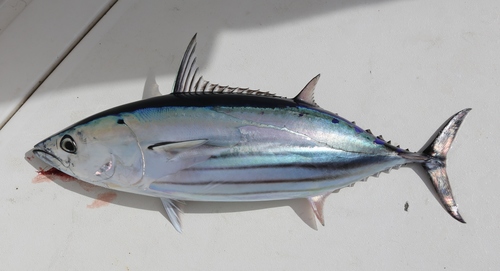
Skipjack Tuna
Katsuwonus pelamis
The ultimate sprinter of the seas, the Skipjack Tuna is a marvel of evolution and speed. With its iconic racing stripes and tireless energy, this pelagic predator is a favorite for ocean enthusiasts and coastal observers alike.
Quick Identification
Size
Typically 60-80 cm (24-31 inches) in length, but can grow up to 1.1 m (43 inches); usually weighs 8-10 kg (18-22 lbs).
Colors
Dark purple or blue on the back with a silvery belly; distinguished by 4-6 prominent dark longitudinal stripes running along the lower sides.
Key Features
- 4-6 dark longitudinal stripes on the lower body and belly
- Streamlined, torpedo-shaped body built for speed
- Deep purple to blue dorsal coloration
- Absence of scales except on the corselet and lateral line
When You’ll See Them
Behavior
Skipjack Tuna are the high-performance athletes of the ocean. They are highly migratory, pelagic fish that are constantly on the move, both to hunt and to breathe. As obligate ram ventilators, they must swim continuously to force oxygen-rich water over their gills. They are incredibly social and form massive schools, sometimes containing tens of thousands of individuals, often mixing with other species like Yellowfin Tuna or even whale sharks.
These fish are known for their voracious appetites and high metabolism. They are opportunistic predators, darting into schools of baitfish with incredible speed. To humans, they are one of the most commercially significant fish species in the world, making up a large portion of the global canned tuna market. While they don't interact with humans in a traditional 'social' sense, they are a prized catch for coastal anglers and a thrilling sight for marine observers.
EverydayEarth exclusive
Camera Tips
Capturing the lightning-fast Skipjack Tuna requires a significant shift from traditional backyard setups to specialized marine rigs. Since these are pelagic fish, your best chance for a 'backyard' shot is from a coastal pier, a deep-water dock, or by using a waterproof action camera mounted to a weighted drop-line. Because they move at speeds up to 40 mph, you must set your camera to a high frame rate—at least 60 or 120 frames per second—to capture clear, non-blurry footage of their striking belly stripes.
Lighting is the most critical factor in underwater or coastal photography. If you are filming from above the water on a dock, always use a circular polarizing filter on your lens. This is essential to cut through the surface reflection and glare, allowing the camera to see the Skipjack's distinctive markings clearly. For underwater setups, position your camera 3-6 feet below the surface, facing away from the sun to avoid direct lens flare, and utilize the 'golden hour' light when Skipjacks are most likely to be surface-feeding.
To bring Skipjack Tuna within range of your camera, you can use a 'chum' bag filled with oily fish like sardines or mackerel hung near the lens. If you are using an AI-powered underwater housing, ensure the motion trigger sensitivity is set to 'high' to account for their rapid darting movements. Always remember to rinse your camera housing in fresh water after every deployment; salt crystallization is the leading cause of seal failure and blurry shots in marine wildlife photography.
Similar Species
Species that look similar or are commonly confused with Skipjack Tuna.
Frequently Asked Questions
Record Skipjack Tuna at your habitat
Connect a camera to start building your own species record — AI identifies every visitor automatically.