Little Tunny
Euthynnus alletteratus
The speed demon of the Atlantic coast, the Little Tunny is a master of the high-speed chase. With its stunning 'worm-track' patterns and powerful schooling instincts, it's a true marvel of the open ocean.
Quick Identification
Size
Typically 60–80 cm (24–31 in) long and 2–5 kg (5–11 lb), but can reach 120 cm (47 in) and 16.5 kg (36 lb)
Colors
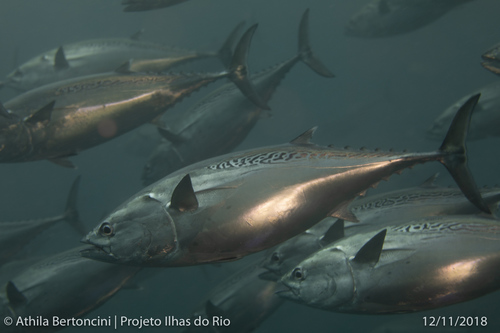
Steel blue upper body with dark, wavy vermiculations; silvery-white belly; 3-7 dark thumbprint-like spots between pectoral and pelvic fins
Key Features
- Wavy 'worm-like' dark lines on the upper back
- 3-7 distinct dark spots between the pectoral and ventral fins
- Streamlined, scaleless torpedo-shaped body (except corselet)
- Tightly packed finlets behind the dorsal and anal fins
When You’ll See Them
Geographic range
Where Does the Little Tunny Live?
Native to the broad reaches of the Atlantic Ocean, the Little Tunny is found from the coast of New England down through the Caribbean to Brazil in the west, and from the United Kingdom to South Africa in the east. This highly migratory species is also a common resident of the Mediterranean and Black Seas, where it thrives in warm-temperate to tropical waters along the continental shelf.
Basemap © OpenStreetMap contributors
Behavior
The Little Tunny is a high-octane predator known for its incredible speed and schooling behavior. As a ram-ventilator, it lacks a swim bladder and must remain in constant motion to breathe and maintain its position in the water column. This necessity for speed makes them one of the most energetic fish in the Atlantic, often seen in massive schools that coordinate to drive baitfish toward the surface in explosive feeding events known as "blitzes."
While they are technically a species of tuna, they are often called "false albacore" by anglers because their dark, iron-rich meat is less prized for eating than that of the Bluefin or Yellowfin. However, their social nature and accessibility make them a favorite for coastal observers. They are highly migratory, following warm water currents and seasonal bait migrations, often moving remarkably close to the shoreline during the late summer and autumn months.
EverydayEarth exclusive
Camera Tips
Capturing the Little Tunny requires specialized underwater action cameras or AI-powered housings, as they are strictly aquatic. For the most dramatic footage, mount your camera near structures like piers, artificial reefs, or jetties where these fish congregate to hunt. Because of their extreme swimming speeds, use a high frame rate setting—at least 60fps or 120fps—to ensure the footage is crisp when they dart through the frame.
Since you cannot bait a backyard in the traditional sense, you can attract Little Tunny to your camera lens by using visual lures. Hanging highly reflective metal flashers or "daisy chains" 3-5 feet in front of the camera can mimic a school of baitfish and trigger the tunny's predatory curiosity. If you are filming from a boat or pier, a chum bag filled with ground sardines can help keep the school in front of your lens for longer periods.
Lighting is the biggest challenge in underwater photography. Little Tunny are surface-dwellers, so position your camera in the top 10 feet of the water column to take advantage of natural sunlight. Angle the camera so the sun is at your back; this will catch the brilliant silver reflection of the fish's flanks as they turn. During the fall migration, look for "bird shows" (diving gulls)—this is a surefire sign that a school is nearby and it's time to get the camera in the water.
If you are using a stationary underwater trail cam, check the tide charts. Little Tunny often follow the incoming tide into inlets and bays as it brings in fresh baitfish. Setting your camera to record during the two hours before and after high tide will significantly increase your chances of capturing a passing school.
Similar Species
Species that look similar or are commonly confused with Little Tunny.
Atlantic Bonito
Has straight diagonal stripes across its back rather than wavy lines, and lacks the dark spots on the belly.
Skipjack Tuna
Features dark longitudinal stripes on its silver belly rather than wavy patterns on its back.
Bullet Tuna
Much smaller in size with a significantly wider gap between the first and second dorsal fins.
Frequently Asked Questions
Record Little Tunny at your habitat
Connect a camera to start building your own species record — AI identifies every visitor automatically.