Bighorn Sheep
Ovis canadensis
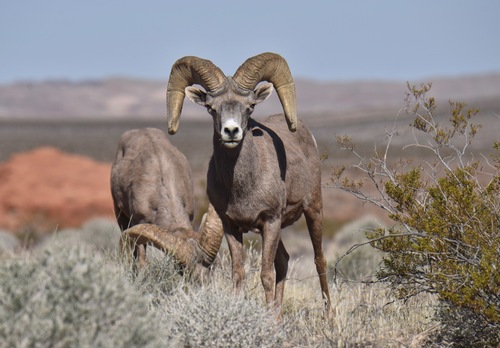
Master of the mountain peaks, the Bighorn Sheep is a symbol of the American West's rugged spirit. Known for their massive, curling horns and incredible climbing agility, these majestic mammals thrive where few others dare to tread.
Quick Identification
Size
Rams: 1.5–1.8 m (5–6 ft) long, 58–143 kg (128–315 lb). Ewes: 34–68 kg (75–150 lb).
Colors
Brownish-gray to dark chocolate coat with a cream-colored muzzle and a distinct white rump patch.
Key Features
- Massive, spiraling brown horns on males
- Prominent white rump patch
- Stocky, muscular build with sand-colored muzzle
- Square-shaped hooves designed for rock climbing
When You’ll See Them
Sightings on EverydayEarth
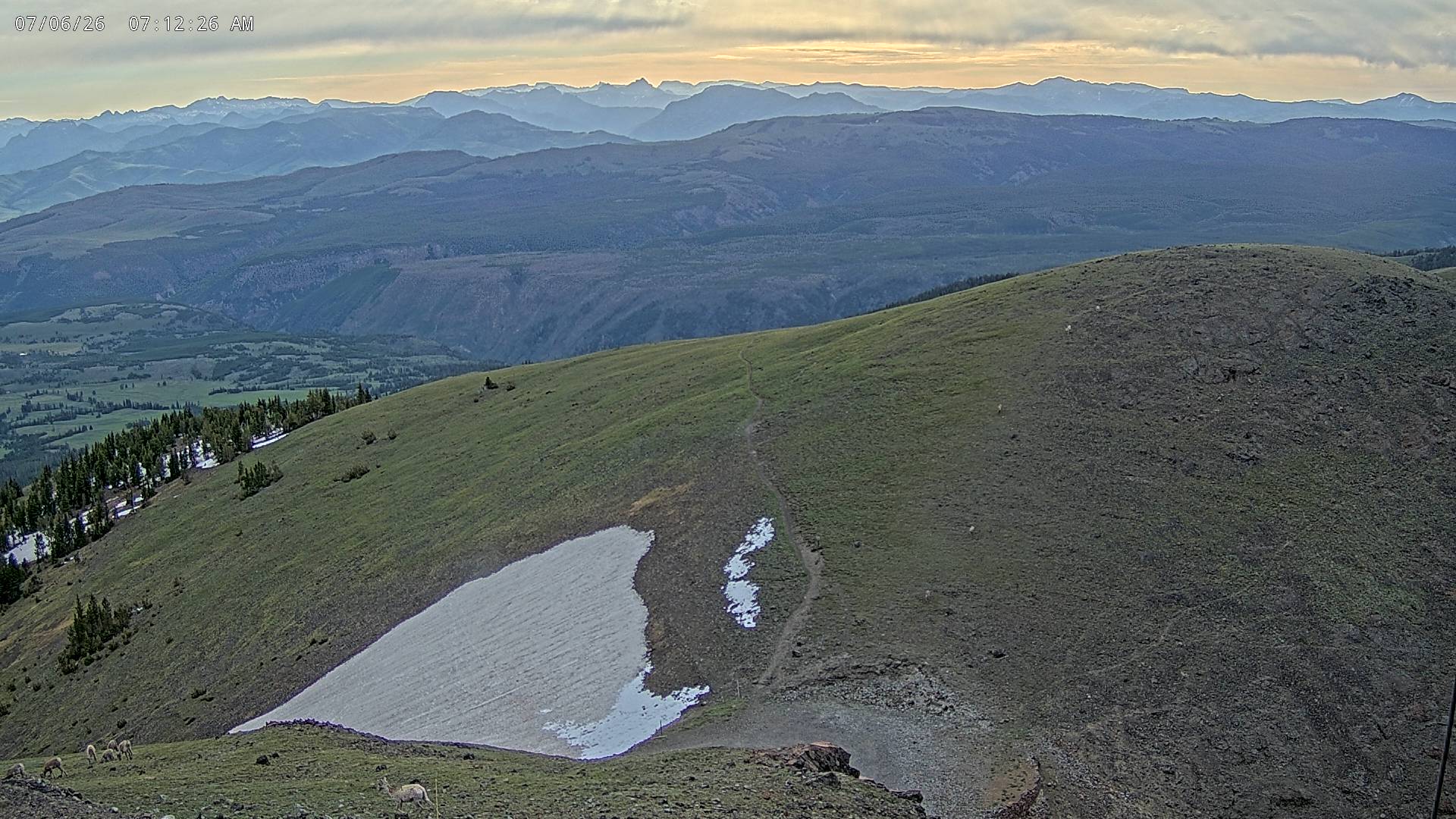
Jul 6, 2026
A group of Bighorn Sheep is grazing and moving across the high-altitude slopes of Mount Washburn. Several individuals are visible in the foreground rocky area, while others are scattered across the greening alpine tundra in the middle ground.
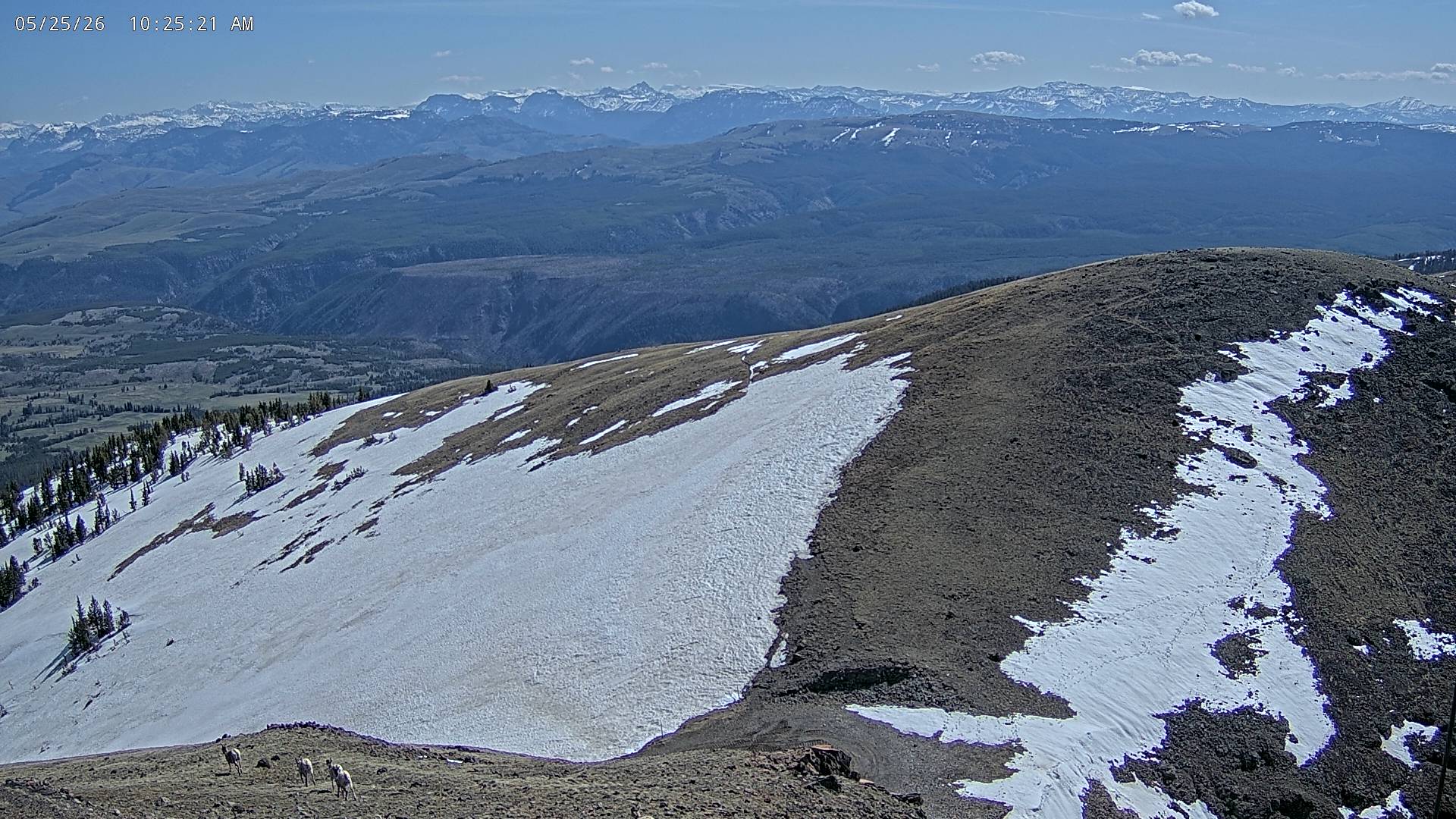
May 25, 2026
Three Bighorn Sheep are traversing a rocky ridge in the lower-left foreground of a wide mountain vista. They are walking along the edge of a steep slope overlooking a valley and distant snow-capped peaks.
Geographic range
Where Does the Bighorn Sheep Live?
Native to the rugged mountain ranges of western North America, bighorn sheep inhabit a vast corridor stretching from the Canadian Rockies in British Columbia and Alberta down through the western United States and into the northern states of Mexico. They are most concentrated in the high-elevation wilderness of the Rocky Mountains, the Sierra Nevada, and the arid desert peaks of the Southwest. Because they require specialized escape terrain consisting of steep cliffs and rocky outcroppings, their distribution is often patchy and restricted to protected public lands and national parks.
Basemap © OpenStreetMap contributors
Behavior
Bighorn sheep are highly social animals that live in herds, though rams and ewes typically remain in separate groups for most of the year. They are world-renowned for the 'rut,' where males engage in dramatic head-butting contests, charging at speeds up to 40 mph to establish dominance. Despite their heavy weight, they are incredibly agile on vertical terrain, using their specialized hooves to grip narrow ledges and outrun predators like mountain lions.
These herbivores follow a seasonal migration pattern, moving to high-altitude alpine meadows in the summer and descending to lower, sun-exposed valleys during the winter to find forage. While generally wary of humans, populations in national parks have become somewhat habituated, though they should always be given a wide berth as they can be unpredictable, especially during the breeding season.
EverydayEarth exclusive
Camera Tips
To capture bighorn sheep on a trail camera, you must focus on 'escape terrain'—the steep, rocky areas where they retreat for safety. Look for well-worn game trails that transition between grassy feeding plateaus and these vertical cliffs. Position your camera at about chest height (3-4 feet) to account for their stocky build. Because they move in herds, use a wide-angle lens setting if available, and set a shorter trigger interval to capture the entire group as they pass by.
In arid environments like the Southwest, water is the ultimate draw. Placing a camera near a known spring or 'guzzler' (man-made water source) is highly effective, especially during the heat of the day. Avoid pointing the camera directly East or West to prevent sun flare from ruining your shots during their peak morning and evening movement times. Ensure the camera is securely strapped to a solid rock or post, as these curious animals may occasionally nudge or investigate foreign objects in their environment.
Seasonal timing is crucial for the most dramatic footage. Aim for the late autumn rut (typically November and December), when rams are most active and prone to displays of dominance. During this time, look for 'ram pastures'—open meadows adjacent to steep slopes. For settings, use a high shutter speed to freeze the action of a head-butt, and ensure your PIR (motion sensor) sensitivity is set to high, as sheep can move surprisingly fast when startled or during a chase.
Lastly, never use food bait or salt licks to attract bighorn sheep, as this can facilitate the spread of respiratory diseases, which are a major threat to their populations. Instead, rely on natural funnels like narrow ridgelines or saddles in the terrain. If you are in a backyard setting bordering a canyon, a birdbath or a simple water feature might attract them, but the best shots always come from observing their natural movement between bedding and grazing areas.
Similar Species
Species that look similar or are commonly confused with Bighorn Sheep.
Frequently Asked Questions
Record Bighorn Sheep at your habitat
Connect a camera to start building your own species record — AI identifies every visitor automatically.