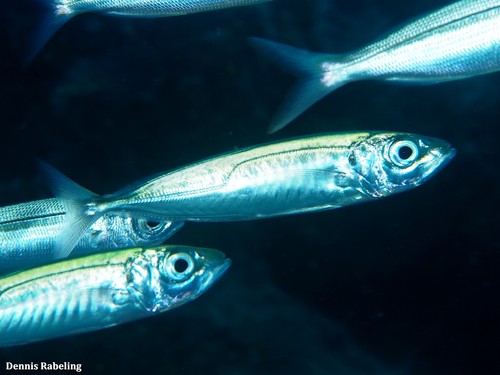
Blue Jack Mackerel
Trachurus picturatus
A shimmering sentinel of the Atlantic, the Blue Jack Mackerel moves in dazzling silver shoals through the coastal depths. With its streamlined body and lightning-fast reflexes, it is a master of the open water.
Quick Identification
Size
Commonly 25 cm (10 in), with a maximum length of 60 cm (24 in); weight up to 1.5 kg (3.3 lbs)
Colors
Bluish to greenish-grey upper body, silvery-white belly, and a distinctive small dark spot on the gill cover
Key Features
- Elongated fusiform body shape
- Highly curved lateral line with prominent bony scutes
- Large eyes with a well-developed adipose eyelid
- Two separate dorsal fins
When You’ll See Them
Geographic range
Where Does the Blue Jack Mackerel Live?
The Blue Jack Mackerel is native to the Eastern Atlantic Ocean, thriving in the temperate and subtropical waters of the European and African coastlines. Its core range spans from the Bay of Biscay in the north, down through the waters of Spain and Portugal, to the southern shores of Morocco. It is particularly abundant around the Macaronesian islands—including the Azores, Madeira, and the Canary Islands—and maintains a significant presence throughout the western Mediterranean Sea.
Basemap © OpenStreetMap contributors
Behavior
In their interactions with humans, they are primarily known as a commercial and game fish. While they do not show complex social hierarchies, their synchronized swimming is a marvel of collective behavior, allowing the shoal to act as a single, shimmering organism to confuse hunters like tuna, dolphins, and seabirds.
EverydayEarth exclusive
Camera Tips
To attract these fast-moving fish to your camera’s field of view, use a scent-based lure or 'chum.' A mesh bag filled with oily fish scraps, like sardines or mackerel, secured a few feet from the lens will create a scent trail that draws them in. Additionally, Blue Jack Mackerel are attracted to visual stimuli; adding a small, shiny metal spinner or a reflective 'flash' tape near the bait can mimic the shimmer of a panicked baitfish, triggering their predatory instincts and bringing them right in front of the sensor.
Because water absorbs light quickly, especially the red end of the spectrum, your footage may appear very blue or green. If your camera setup allows, use a red filter or external underwater video lights to bring out the natural silver and blue hues of the fish. Since they are most active during the 'change of light' at dawn and dusk, ensure your camera is set to a high frame rate (at least 60fps) to avoid motion blur, as these fish are incredibly fast and change direction in the blink of an eye.
Similar Species
Species that look similar or are commonly confused with Blue Jack Mackerel.
Frequently Asked Questions
Record Blue Jack Mackerel at your habitat
Connect a camera to start building your own species record — AI identifies every visitor automatically.