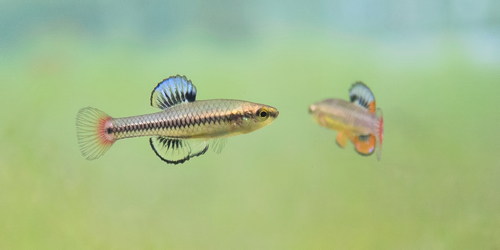
Bluefin Killifish
Lucania goodei
A hidden gem of the Southeast, the Bluefin Killifish brings a flash of iridescent blue to backyard ponds and crystal-clear springs. These tiny, spirited fish are nature's mosquito controllers and a favorite for underwater photography.
Quick Identification
Size
1 to 2 inches (2.5 to 5 cm) in length
Colors
Olive to tan body with a prominent black horizontal stripe. Mature males feature iridescent blue on their dorsal and anal fins, while females have clear or slightly yellowish fins.
Key Features
- Bold black stripe running from snout to tail
- Iridescent blue dorsal and anal fins on males
- Small upturned mouth for surface feeding
- Slender, streamlined body shape
When You’ll See Them
Geographic range
Where Does the Bluefin Killifish Live?
The Bluefin Killifish is a North American native primarily found throughout the Florida peninsula and parts of the southeastern United States coastal plain. While its heartland is Florida, its range extends into southeastern Georgia and parts of Alabama. Due to the aquarium trade and aquatic plant transport, introduced populations have also established themselves in localized areas of California, Texas, and North Carolina.
Basemap © OpenStreetMap contributors
Behavior
The Bluefin Killifish is a highly active and social species typically found in the upper layers of the water column. They are known for their 'darting' swimming style, frequently moving between patches of aquatic vegetation to forage or seek cover. Unlike many larger fish, they are relatively bold and can often be seen hovering near the surface in search of small insects or larvae.
During the breeding season, these fish exhibit fascinating social dynamics. Males are highly territorial and will engage in 'fin-flashing' displays to attract females and intimidate other males. These displays are a highlight for backyard observers, as the brilliant blue of their fins catches the light vividly. They are generally peaceful and coexist well with other small, non-aggressive native species.
EverydayEarth exclusive
Camera Tips
To capture high-quality footage of Bluefin Killifish, an underwater camera setup is essential. Place your camera inside a clear-water backyard pond or a slow-moving spring run, positioning the lens just a few inches below the surface. These fish are 'topminnows,' meaning they spend the vast majority of their time in the top 12 inches of the water column. Aim the camera toward a dense patch of underwater plants like Eelgrass or Anacharis, as males use these as stages for their vibrant blue-fin displays.
Lighting is the most critical factor for this species. Their blue coloration is structural and iridescent, meaning it looks most brilliant in direct, bright sunlight. Try to time your recording for the middle of the day (10 AM to 2 PM) when the sun is directly overhead. If the water is deep or shaded, a small waterproof LED light can help pop the colors of the fins, but be careful not to wash out the natural olive tones of the body.
Because Bluefin Killifish are curious and food-motivated, you can draw them toward the camera lens using small amounts of bait. A pinch of crushed flake food or a small container of live daphnia placed near the focal point will bring the school into view. Set your camera to a high frame rate (at least 60fps) to avoid motion blur, as their movements are incredibly fast and jerky when they are interacting or competing for food.
Similar Species
Species that look similar or are commonly confused with Bluefin Killifish.
Frequently Asked Questions
Record Bluefin Killifish at your habitat
Connect a camera to start building your own species record — AI identifies every visitor automatically.