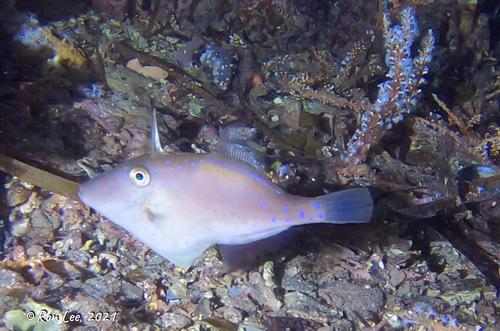
Bluefin Leatherjacket
Thamnaconus degeni
A splash of electric blue in the temperate reefs of Australia, the Bluefin Leatherjacket is a curious and social reef dweller. Known for its sandpaper-like skin and striking fin coloration, it is a favorite for underwater observers across the Great Southern Reef.
Quick Identification
Size
Typically 22–30 cm (8.5–12 inches) in length; maximum weight approximately 0.4 kg (0.9 lbs).
Colors
Mottled greyish-brown to olive body; distinctive bright electric-blue margins on the second dorsal, anal, and caudal fins.
Key Features
- Prominent retractable dorsal spine located above the eyes
- Electric blue edges on the soft dorsal and anal fins
- Small, terminal mouth with powerful nipping teeth
- Rough, sandpaper-like skin texture without large scales
When You’ll See Them
Geographic range
Where Does the Bluefin Leatherjacket Live?
The Bluefin Leatherjacket is native to the temperate coastal waters of southern Australia. Its primary range spans from the central coast of New South Wales, around the southern coastline of Victoria and South Australia, to the southwestern reaches of Western Australia. It is particularly abundant in the cool, nutrient-rich waters surrounding Tasmania and the Bass Strait, making it a staple of the Great Southern Reef ecosystem.
Basemap © OpenStreetMap contributors
Behavior
The Bluefin Leatherjacket is a social and moderately active species often found in loose schools or small groups. Unlike many other leatherjackets that remain solitary, this species frequently aggregates over rocky reefs or sponge gardens. They are diurnal, meaning they are most active during daylight hours when they forage across the seabed, moving with a graceful, undulating motion of their fins rather than powerful tail beats.
In their natural habitat, they are known to be quite inquisitive, often approaching divers or underwater camera rigs to investigate. While they are not aggressive, they are cautious of sudden movements. They play a vital role in the ecosystem by grazing on sponges and small invertebrates, which helps regulate the growth of encrusting organisms on reef surfaces. When threatened, they use their large first dorsal spine to lock themselves into crevices, making it nearly impossible for predators to extract them.
EverydayEarth exclusive
Camera Tips
Capturing the Bluefin Leatherjacket requires an underwater camera setup. Since these are marine fish, the most effective method is using a 'BRUV' (Baited Remote Underwater Video) system. Mount your camera—such as a GoPro or a specialized marine housing—onto a weighted base or tripod to keep it steady on the seafloor. Position the camera on the edge of a rocky reef facing a sandy clearing, as leatherjackets often hover in these transition zones to forage.
To attract this specific species, use a mesh bait bag filled with oily fish like sardines or pilchards. The scent will draw them in from the surrounding reef. Ensure the bait bag is positioned about 0.5 to 1 metre in front of the lens. Because Bluefin Leatherjackets are curious, they will often spend several minutes nipping at the bait, providing excellent opportunities for high-resolution close-ups of their blue-fringed fins and unique facial features.
For the best visual results, deploy your camera during the middle of the day when the sun is directly overhead. This provides the best natural light penetration, which is essential for making the 'blue' in their fins pop against the darker reef background. If you are filming deeper than 15 metres, consider using a red filter or an external underwater video light to restore the warm colors that are lost at depth.
Set your camera to record at 60 frames per second (fps). This allows you to slow down the footage in post-production to appreciate the intricate, wave-like movement of their dorsal and anal fins, which is their primary mode of propulsion. Always check your camera's waterproof seals for sand or hair before deployment, and thoroughly rinse the housing in fresh water after every saltwater session to prevent corrosion.
Similar Species
Species that look similar or are commonly confused with Bluefin Leatherjacket.
Frequently Asked Questions
Record Bluefin Leatherjacket at your habitat
Connect a camera to start building your own species record — AI identifies every visitor automatically.