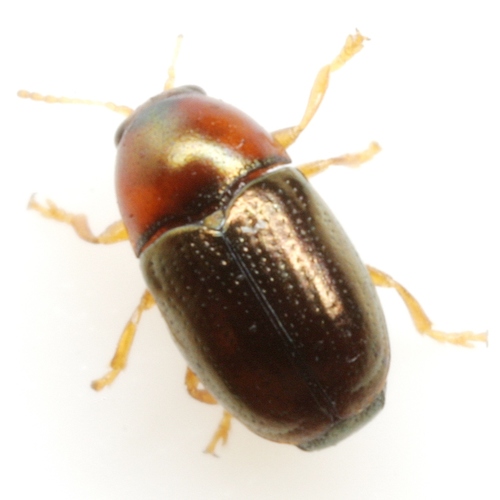
Bronze Leaf Beetle
Diachus auratus
A tiny, living jewel in the garden, the Bronze Leaf Beetle dazzles with its metallic copper sheen. Though small enough to sit on a pinhead, these resilient travelers have conquered gardens on nearly every continent.
Quick Identification
Size
1.5–2.5 mm (0.06–0.1 inches) in length
Colors
Metallic bronze, brassy-yellow, or dark copper; legs and basal segments of antennae are typically reddish-yellow
Key Features
- Minute, oval-shaped body with a metallic sheen
- Distinctive reddish-yellow color on the base of the antennae
- Larvae are case-bearers, living inside a protective shell
- Head is often partially retracted into the thorax
When You’ll See Them
Geographic range
Where Does the Bronze Leaf Beetle Live?
The Bronze Leaf Beetle is a cosmopolitian species with a massive global footprint. Native to the Americas, its core range spans from southern Canada across the United States to Central and South America. However, it has successfully colonized much of the rest of the world, including Australia, Southern Asia, and various islands across the Caribbean and Oceania, thriving wherever suitable host plants and temperate to tropical climates exist.
Basemap © OpenStreetMap contributors
Behavior
The Bronze Leaf Beetle is a fascinating member of the case-bearing beetle group. As larvae, these insects construct a portable home out of their own waste and plant debris, living inside this protective shell much like a hermit crab. As adults, they emerge as tiny, gleaming metallic beetles that spend the majority of their time on the surfaces of leaves, basking in the sun and feeding on plant tissue.
These beetles are primarily solitary and are known for their shy nature. When they sense a vibration or a potential predator, they utilize a defense mechanism known as 'thanatosis' or feigning death. They will tuck their legs and antennae into specialized grooves on their underside and drop from the leaf into the thick thatch or soil below, where their bronze color helps them blend in with dried organic matter. Despite their small size, they are strong fliers and will move between gardens to find suitable host plants.
EverydayEarth exclusive
Camera Tips
Capturing the Bronze Leaf Beetle on camera is a rewarding challenge due to its tiny size. Standard trail cameras will likely miss them; you will need a camera capable of macro photography or a smartphone with a high-quality macro lens attachment. Focus your efforts on known host plants like roses, willows, or citrus trees. Look for small 'shot-hole' damage on leaves—tiny, circular holes that indicate these beetles have been feeding recently.
For the best results, set up your camera during the warmest, brightest part of the day. These beetles are heliophilic, meaning they love the sun. The metallic bronze of their carapace reflects sunlight beautifully, but it can create harsh highlights. If you are using a manual setup, try to position yourself so the sun is at a 45-degree angle to the beetle to capture the iridescent sheen without blowing out the image details. A fast shutter speed is essential as they can be surprisingly quick when crawling.
Because they are so small, camera stability is paramount. Even a slight breeze moving a leaf can throw your subject out of focus. Use a specialized plant clamp (often called a 'Plamp') to steady the branch you are monitoring. If using an AI-powered backyard camera, ensure it is positioned as close to the foliage as the minimum focal distance allows, and look for high-resolution settings that allow for digital cropping later. Patience is key, as you may need to wait for the beetle to move from the underside of a leaf to the top to get the perfect shot.
Similar Species
Species that look similar or are commonly confused with Bronze Leaf Beetle.
Frequently Asked Questions
Record Bronze Leaf Beetle at your habitat
Connect a camera to start building your own species record — AI identifies every visitor automatically.