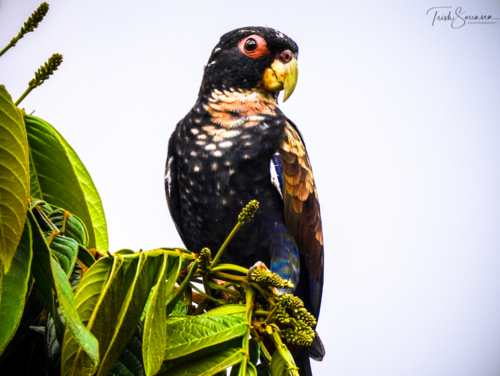
Bronze-winged Parrot
Pionus chalcopterus
Draped in deep violet and shimmering bronze, the Bronze-winged Parrot is a hidden gem of the Andean cloud forests. This stocky, soulful bird is a favorite for its unique metallic coloration and calm, social demeanor.
Quick Identification
Size
28–30 cm (11–12 in) long; weight typically ranges from 210 to 230 g (7.4–8.1 oz)
Colors
Deep violet-blue body with bronze-green wing coverts; white chin patch; pinkish-red undertail coverts; bronze-brown head with pale feather edges
Key Features
- Bronze-colored wing patches
- Deep violet-blue plumage
- Short, square tail with red under-feathers
- Distinctive white chin spot
When You’ll See Them
Geographic range
Where Does the Bronze-winged Parrot Live?
The Bronze-winged Parrot is native to the lush, mountainous regions of north-western South America. Its core range follows the Andes through western Venezuela, central and western Colombia, and Ecuador, extending into the northernmost reaches of Peru. This species thrives primarily in tropical and subtropical zones, often moving between different elevations in response to the seasonal ripening of fruit trees.
Basemap © OpenStreetMap contributors
Behavior
Bronze-winged Parrots are social yet relatively quiet birds compared to the boisterous nature of many other parrot species. They are typically found in small groups of 10 or fewer, though larger flocks may form around particularly abundant food sources or mineral licks. They are known for their fast, direct flight and can be quite elusive when feeding in the canopy, as their dark plumage blends perfectly with the shadows of the forest.
In terms of social interaction, these parrots form strong, monogamous pair bonds. They are known for a specific behavior called 'wing-flicking,' which often signals excitement or agitation. While they are generally shy around humans in the wild, they are highly intelligent and observant, often keeping a watchful eye on their surroundings from high vantage points before descending to feed.
EverydayEarth exclusive
Camera Tips
To capture the stunning metallic highlights of the Bronze-winged Parrot, camera placement is everything. These birds are strictly arboreal, so mounting your camera at a significant height—ideally overlooking a known fruiting tree like a wild fig or a palm—is essential. If you are in a region with mineral licks (saladeros), placing a camera on a tripod overlooking these clay banks can provide some of the best ground-level opportunities, as the birds descend to consume minerals.
Light angle is your best friend when filming this species. Because their plumage is a deep, dark violet-blue, they can appear almost black in low light or heavy shade. Aim your camera toward a spot that receives direct morning sunlight; the golden hour will make the bronze patches on their wings truly 'pop' and reveal the intricate feather details on their heads. Using a fast shutter speed is recommended, as their flight is swift and their movements while feeding can be jerky.
For backyard enthusiasts living on the edge of Andean forests, elevated platform feeders stocked with native fruits can act as a great lure. Use a camera with a high-resolution sensor and set it to record short 20-30 second video clips. This allows you to capture their unique social behaviors, such as the characteristic 'Pionus strut' or their quiet, wheezing vocalizations that are often missed on standard trail camera photos.
Similar Species
Species that look similar or are commonly confused with Bronze-winged Parrot.
Frequently Asked Questions
Record Bronze-winged Parrot at your habitat
Connect a camera to start building your own species record — AI identifies every visitor automatically.