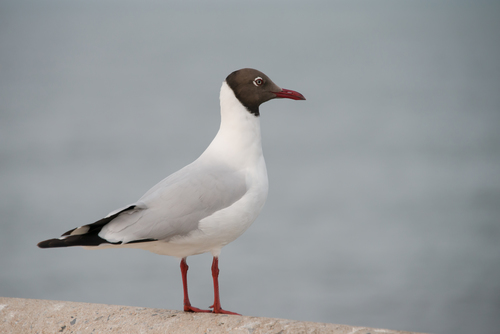
Brown-headed Gull
Chroicocephalus brunnicephalus
A resilient traveler of the Central Asian highlands, the Brown-headed Gull is famous for its chocolatey breeding hood and its annual migration to the sun-soaked shores of South Asia.
Quick Identification
Size
Length 41–46 cm (16–18 in); wingspan 105–115 cm (41–45 in); weight 450–700 g (1–1.5 lbs)
Colors
Pale grey upperparts, white underparts; breeding adults have a dark brown hood; non-breeding adults have white heads with a dark ear patch; bright red bill and legs.
Key Features
- Dark brown hood that doesn't reach the nape (breeding)
- Distinctive large white 'mirrors' on black primary wing feathers
- Bright crimson-red bill and legs
- Heavier bill compared to similar-looking gulls
When You’ll See Them
Geographic range
Where Does the Brown-headed Gull Live?
Native to the high-altitude plateaus of Central Asia, the Brown-headed Gull spends its summers breeding in regions spanning from Tajikistan to the Inner Mongolian reaches of China. When the cold sets in, these birds embark on a massive migration southward to the warmer coastal fringes of the Indian subcontinent and Southeast Asia. They are a common winter fixture along the shorelines of India, Sri Lanka, Bangladesh, and Thailand, where they transition from mountain specialists to coastal residents.
Basemap © OpenStreetMap contributors
Behavior
Brown-headed Gulls are highly social and gregarious birds, often found in large, vocal flocks alongside other gull species. They are exceptional flyers, capable of agile maneuvers to catch insects in mid-air or snatching fish from just below the water's surface. While they are bold scavengers in coastal ports and urban areas, they maintain a more cautious demeanor in their high-altitude breeding grounds.
These gulls exhibit complex social hierarchies, especially during the breeding season when they congregate in dense colonies on island marshes. They are known for their loud, raucous 'kraaa' calls, which are used to defend territory or signal the discovery of a food source. In their wintering range, they are common sights following fishing trawlers or patrolling beaches for morsels left by the tide.
EverydayEarth exclusive
Camera Tips
To capture the best footage of Brown-headed Gulls, position your camera at a very low angle—ideally just a few inches above the ground—facing the water's edge. This perspective emphasizes their striking red legs and bill, providing a much more intimate view than a downward-facing angle. If you are placing a camera near a coastal backyard or dock, look for 'loafing' spots like flat rocks or pilings where they rest between foraging sessions.
Because these gulls have bright white underparts, they can easily 'blow out' in direct midday sun. Set your camera's exposure compensation to -0.5 or -1.0 if your model allows, or place the camera in an area that receives soft morning light. This will help preserve the detail in their feathers. Use a high-speed trigger setting or a camera with a high frame rate, as their movements can be incredibly fast when they are competing for food or taking flight.
In a backyard setting near the coast, you can attract them using a shallow, wide water feature or birdbath. They are particularly drawn to moving water, so a small solar fountain can act as a visual and auditory lure. While they are scavengers, it is best to avoid using human food as bait; instead, focus on placing the camera in locations where natural foraging occurs, such as near tide pools or shoreline debris where insects and small crustaceans gather.
Similar Species
Species that look similar or are commonly confused with Brown-headed Gull.
Frequently Asked Questions
Record Brown-headed Gull at your habitat
Connect a camera to start building your own species record — AI identifies every visitor automatically.