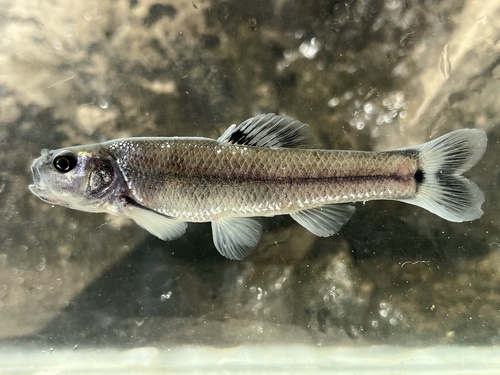
Bullhead Minnow
Pimephales vigilax
A hardy survivor of the Mississippi drainage, the Bullhead Minnow is a fascinating social fish known for its distinctive 'bull' snout and dedicated parental care.
Quick Identification
Size
Typically 5 to 9 cm (2 to 3.5 inches) in length; weighs less than 30 grams (1 ounce)
Colors
Olive to silvery-tan upper body with bright silver sides and a white belly; features a prominent black spot at the base of the tail and a smaller dark spot on the front of the dorsal fin
Key Features
- Blunt, rounded 'bull' snout
- Distinct black spot at the base of the caudal (tail) fin
- Complete lateral line extending to the tail
- Wedge-shaped dark spot on the leading edge of the dorsal fin
When You’ll See Them
Geographic range
Where Does the Bullhead Minnow Live?
Native to the North American continent, the Bullhead Minnow is a quintessential resident of the massive Mississippi River drainage system. Its core range extends from the Gulf Coast of the United States and northern Mexico up through the central plains and into the Ohio River Valley. While primarily a southern and central species, populations have also established themselves in the tributaries of Lake Michigan and Lake Huron, likely aided by human activity and bait bucket releases. They thrive in the warm, murky waters of the American Midwest and South, avoiding the fast-moving, cold mountain streams of the Appalachians or Rockies.
Basemap © OpenStreetMap contributors
Behavior
The Bullhead Minnow is a social, schooling fish that spends most of its time near the bottom of riverbeds and pools. Known for its hardy nature, it is a demersal species, meaning it prefers the 'benthic' zone where it can sift through silt and sand. Unlike many other small minnows, they are relatively sedentary and don't migrate long distances, preferring to establish small home ranges in slow-moving water.
During the breeding season, the social structure becomes more complex. Dominant males undergo a physical transformation, developing hardened bumps called tubercles on their snouts and darkening in color. These males become fiercely territorial, selecting a nesting site under a flat rock or submerged log. They will diligently clean the surface and guard the eggs deposited by females, fanning them with their fins to ensure oxygen flow and protecting them from smaller predators.
EverydayEarth exclusive
Camera Tips
To capture the Bullhead Minnow on camera, you will need to transition from standard trail cams to specialized underwater equipment or a submersible housing. Because these fish are demersal, position your camera just a few inches above the substrate, angled slightly upward. Focus on 'slack water' areas—spots where the current slows down significantly, such as behind a large rock or in a creek bend—as this is where they school to conserve energy.
Visibility is the biggest challenge when filming minnows. Choose a day after a period of no rain when the sediment has settled and the water is clear. Using a polarized filter on your lens can significantly reduce surface glare if you are filming from a shallow bank, but for the best results, a submerged camera with a wide-angle lens is preferred. If your camera allows for high-frame-rate recording (60fps or higher), use it; these fish move in quick, jerky bursts that look much better in fluid motion.
Attracting Bullhead Minnows is relatively simple using their natural foraging instincts. Placing a small mesh bag filled with breadcrumbs, crushed dry dog food, or commercial fish pellets just inside the camera's field of view will draw in a school within minutes. Be sure the bait is secured so it doesn't drift away in the current. If you notice a male with a dark head and white 'bumps' (tubercles), look nearby for a flat stone or submerged log; he likely has a nest nearby, which can provide hours of fascinating territorial behavior footage.
Similar Species
Species that look similar or are commonly confused with Bullhead Minnow.
Fathead Minnow
The Fathead Minnow has a shorter lateral line and lacks the distinct, crisp black spot at the base of the tail found on the Bullhead.
Bluntnose Minnow
The Bluntnose has a more slender body and a flatter head compared to the stouter, more rounded profile of the Bullhead Minnow.
Suckermouth Minnow
Features a unique mouth structure adapted for suction, unlike the more traditional terminal mouth of the Bullhead.
Frequently Asked Questions
Record Bullhead Minnow at your habitat
Connect a camera to start building your own species record — AI identifies every visitor automatically.