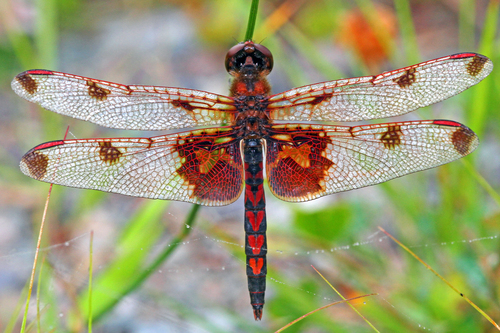
Calico Pennant
Celithemis elisa
A miniature masterpiece of the wetlands, the Calico Pennant stands out with its stained-glass wing patterns and its habit of fluttering like a tiny flag atop garden reeds.
Quick Identification
Size
Length: 1.1–1.3 inches (28–34 mm); Wingspan: 2.0–2.2 inches (50–56 mm)
Colors
Wings feature dark brown spots at the base, middle, and tips. Mature males have red spots on the wings and abdomen; females and juveniles have yellow-gold spots.
Key Features
- Distinctive dark brown splotches on all four wings
- Heart-shaped red or yellow spots along the top of the abdomen
- Perches on the tips of vegetation like a flag or pennant
- Small, stocky body compared to larger darners
When You’ll See Them
Geographic range
Where Does the Calico Pennant Live?
Native to the North American continent, the Calico Pennant is a widespread species across the eastern half of the landmass. Its core range extends from the maritime provinces of eastern Canada through the eastern United States, reaching westward to the Great Plains and southward into the Gulf Coast regions. While they are most abundant in the Northeast and Midwest, they are increasingly common sights in suburban wetland restorations and well-planted backyard ponds throughout their territory.
Basemap © OpenStreetMap contributors
Behavior
The Calico Pennant is best known for its peculiar habit of perching on the very tips of tall grasses, reeds, or twigs near the water's edge. In a breeze, they cling to these vertical supports and flutter like tiny flags, which is how they earned the name 'pennant.' Unlike many other dragonflies that spend hours patrolling the air, the Calico Pennant is a 'percher,' preferring to sit and wait for a passing meal or a potential mate.
These dragonflies are highly territorial and will frequently dart off their perch to chase away intruders before returning to the exact same spot. They are most active during the warmest parts of the day, using the sun's energy to fuel their high-speed aerial maneuvers. While they are wary of sudden movements, they are relatively approachable for photographers if moved toward slowly, making them a favorite subject for backyard naturalists.
EverydayEarth exclusive
Camera Tips
To capture high-quality images of a Calico Pennant, you must take advantage of their 'perching' behavior. Identify a tall, solitary reed or stick near a pond margin where you have seen dragonflies landing. If no natural perch exists, you can 'plant' a attractive dry stick or bamboo stake in a sunny spot near the water. Position your camera on a tripod approximately 2 to 3 feet from this target perch, ensuring the background is distant enough to create a soft, blurred effect that makes the dragonfly pop.
Because dragonflies are cold-blooded, they are most active when the sun is high. However, for the best lighting, aim for the mid-morning (10 AM) or mid-afternoon (3 PM). During these times, the light is less harsh than at high noon, but the insects are still active enough to be frequently landing on their favorite perches. If your camera allows for manual settings, use a fast shutter speed (at least 1/1000s) to freeze the delicate wing patterns, or a high-speed burst mode to catch the moment they take off or land.
AI-powered cameras should be set to a 'small subject' or 'insect' detection mode if available. Since these dragonflies are small, you may need a macro lens or a telephoto lens with a short minimum focusing distance. Avoid using flash during the bright day, as it can create unnatural glints on their metallic bodies and translucent wings. Instead, position your camera so the sun is behind you or to your side to illuminate the intricate 'calico' patterns on their wings.
Similar Species
Species that look similar or are commonly confused with Calico Pennant.
Frequently Asked Questions
Record Calico Pennant at your habitat
Connect a camera to start building your own species record — AI identifies every visitor automatically.