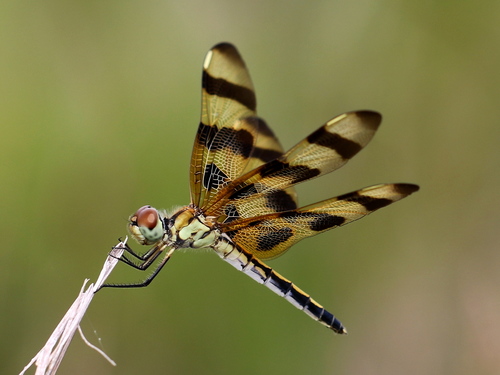
Halloween Pennant
Celithemis eponina
With its striking orange-and-black wings and butterfly-like flight, the Halloween Pennant is a crown jewel of the summer pond. This 'percher' dragonfly adds a splash of autumn color to your backyard long before the leaves begin to turn.
Quick Identification
Size
36–42 mm (1.4–1.7 inches) in length; wingspan approximately 60–75 mm (2.4–3 inches)
Colors
Bright orange to brownish-yellow wings with prominent dark brown bands; mature males develop reddish-orange bodies, while females and juveniles are yellow and black.
Key Features
- Orange and black banded wings similar to a butterfly
- Wings often held upright and fluttery in the wind like a pennant
- Yellow or red heart-shaped spots along the top of the abdomen
- Perches frequently on the very tips of tall weeds and grasses
When You’ll See Them
Behavior
The Halloween Pennant is often mistaken for a butterfly due to its colorful, patterned wings and its distinctive, fluttering flight style. Unlike many other dragonflies that zip through the air at high speeds, this species has a more buoyant, airy way of moving. They are classic 'perchers,' meaning they spend a significant amount of time sitting on the tips of tall vegetation near water, waiting for small insects to fly by.
These dragonflies are remarkably tolerant of windy conditions. While other insects might seek cover, the Halloween Pennant seems to enjoy the breeze, clinging to the top of a swaying grass stem like a flag or pennant—hence their name. They are generally solitary hunters but can be found in high concentrations around healthy pond margins where food is abundant. They are harmless to humans and are actually great neighbors, as they spend their day's patrolling for pests like mosquitoes and midges.
EverydayEarth exclusive
Camera Tips
Capturing a Halloween Pennant on an AI-powered backyard camera requires a strategy focused on 'perch placement.' These dragonflies have a favorite habit of returning to the exact same tall stem or twig after a hunting flight. To get a clear shot, identify a tall, stiff reed or a piece of garden rebar near water and point your camera toward the very tip. Setting up a dedicated 'perch'—a 3-foot bamboo stake placed in a sunny spot near a pond—is the most effective way to lure them into your camera's field of view.
Because these insects are small, you want your camera as close as its minimum focal distance allows. Aim for a side-on profile to capture the striking orange and black wing bands. If your camera has adjustable trigger settings, set it to high sensitivity; although the dragonfly is relatively large for an insect, its fluttery landing might not always trigger lower-end sensors. Ensure the background behind the perch is somewhat distant (like a far-off treeline) to create a beautiful 'bokeh' effect that makes the dragonfly’s colors pop.
Timing is everything with this species. They are heat-lovers, so don't expect much activity on overcast or chilly mornings. The best footage usually occurs during the brightest part of the day when the sun is directly overhead, highlighting the iridescent qualities of their wings. If you are using a trail camera with video capability, look for those windy days; seeing the Halloween Pennant swaying on its perch while keeping its head perfectly level is a fascinating behavioral detail to record.
Lastly, keep your camera away from high-traffic human areas. While they aren't as skittish as some birds, sudden movements will flush them. Position your setup in a quiet corner of the yard where the vegetation is left a bit taller. This creates a natural hunting ground that provides both the prey they need and the perches they love.
Similar Species
Species that look similar or are commonly confused with Halloween Pennant.
Frequently Asked Questions
Record Halloween Pennant at your habitat
Connect a camera to start building your own species record — AI identifies every visitor automatically.