Cape Fig
Ficus sur
Often called the 'supermarket of the bush,' the Cape Fig is a massive, fast-growing tree that produces spectacular clusters of fruit directly on its trunk. It is the ultimate backyard magnet for colorful birds, monkeys, and fruit-bats.
Quick Identification
Size
Height ranges from 10-35 meters (33-115 feet) with a massive canopy spread of up to 30 meters (100 feet).
Colors
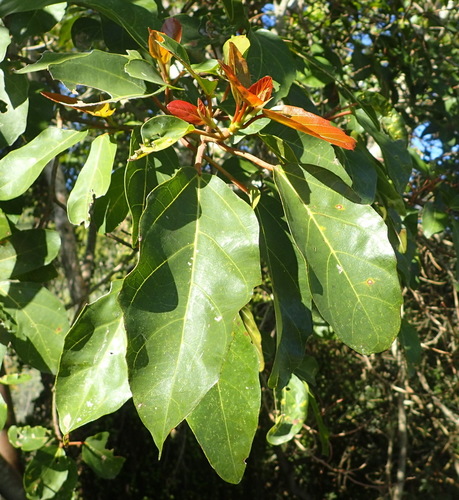
Smooth, light grey to brownish bark; large glossy green leaves with reddish-burgundy new growth; figs turn from green to pinkish-red or orange when ripe.
Key Features
- Figs grow in heavy 'broom-like' clusters directly from the trunk and main branches
- Large ovate leaves with distinct wavy or coarsely toothed margins
- Extensive, buttressed root system in older specimens
- Milky white latex sap visible when a leaf is plucked
When You’ll See Them
Geographic range
Where Does the Cape Fig Live?
The Cape Fig is a quintessential Afrotropical tree, natively blanketing much of Sub-Saharan Africa. Its range extends from the Western Cape of South Africa northward through East Africa into Ethiopia and Eritrea, and westward across the tropical belt to Senegal. It is particularly prevalent in well-watered regions of countries like Kenya, Zimbabwe, and Nigeria, where it is frequently found near permanent water sources or in lush suburban landscapes.
Basemap © OpenStreetMap contributors
Behavior
The Cape Fig is a biological powerhouse known as a 'keystone species' because it provides food for an incredibly wide variety of wildlife. Unlike many other trees that follow a strict seasonal fruiting cycle, the Cape Fig can produce fruit multiple times a year, often out of sync with other species. This ensures that during lean months, there is always a source of nutrition for the local ecosystem.
In a backyard or park setting, the tree acts as a social anchor. It hosts a complex symbiotic relationship with fig wasps; each fig is essentially an inverted flower head that requires a specific species of wasp to enter and pollinate it to produce seeds. This interaction is invisible to the naked eye but is the engine that drives the tree's massive fruit production, which in turn supports dozens of bird and mammal species.
EverydayEarth exclusive
Camera Tips
To capture the incredible biodiversity that visits a Cape Fig, focus your camera lens directly on the 'cauliflorous' clusters—the figs that grow in bunches directly from the main trunk. This is the primary feeding zone for many species. Mount your camera at chest height (about 1.5 meters) and angle it slightly upward toward the largest clusters. This position allows you to capture everything from small sunbirds to large monkeys and even monitor lizards that climb the tree in search of insects or eggs.
Lighting can be a challenge under the dense canopy of a Cape Fig. If your camera allows for it, increase the ISO or exposure compensation slightly to account for the deep shade. Because the wildlife action is often fast-paced—with birds like African Green Pigeons and Turacos darting in and out—use a fast trigger speed and set your camera to 'Burst Mode' to ensure you catch the animal with a fig in its beak.
Keep a close eye on the fruit's ripeness. When the figs transition from hard green orbs to soft, pinkish-red fruits, you should check your camera batteries and clear your SD card. This ripening phase triggers a 'feeding frenzy' that can last for several days. If you are using a video-capable camera, 20-second clips are ideal for capturing the social interactions between different species competing for the best fruit on the trunk.
Similar Species
Species that look similar or are commonly confused with Cape Fig.
Frequently Asked Questions
Record Cape Fig at your habitat
Connect a camera to start building your own species record — AI identifies every visitor automatically.