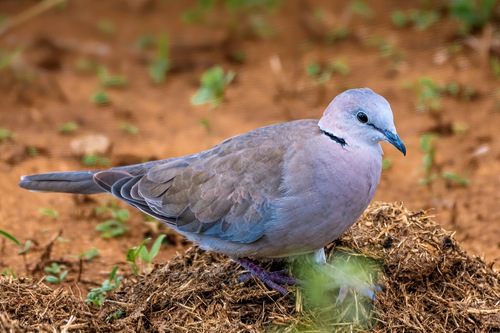
Cape Turtle Dove
Streptopelia capicola
With its soothing, rhythmic call and iconic black neck ring, the Cape Turtle Dove is the quintessential sound of the African wild. This hardy and adaptable bird is a frequent visitor to backyard gardens, always on the lookout for a splash of water or a scattered seed.
Quick Identification
Size
Length: 25-28 cm (10-11 in); Wingspan: 43-48 cm (17-19 in); Weight: 140-165 g (4.9-5.8 oz)
Colors
Pale brownish-grey upperparts with a lavender-pink wash on the breast. A distinctive black semi-collar marks the back of the neck. Tail feathers show white tips in flight.
Key Features
- Black half-collar on the lower nape
- Deep rhythmic three-syllable call
- Lavender-grey breast and pale belly
- Dark brown eyes with no bare skin eye-ring
- Explosive clapping wing sound on takeoff
When You’ll See Them
Sightings on EverydayEarth
Apr 21, 2026
A Cape Turtle-Dove perches on a thin branch amidst the woodland foliage. It remains relatively still, occasionally scanning its surroundings under the soft daylight.
Geographic range
Where Does the Cape Turtle Dove Live?
Native to the African continent, the Cape Turtle Dove is a pervasive presence across Southern and Eastern Africa. Its range extends from the southern tip of South Africa, through the various biomes of Namibia, Botswana, and Zimbabwe, reaching as far north as Ethiopia and Sudan. These adaptable doves thrive in almost any environment within these regions, provided there is a nearby water source and open ground for foraging.
Basemap © OpenStreetMap contributors
Behavior
The Cape Turtle Dove is a social yet often solo-foraging bird, best known for its iconic rhythmic cooing that defines the soundscape of the African savanna and suburban gardens alike. They are primarily ground-feeders, spending much of their day walking with a nodding head motion as they peck for seeds and fallen grains. While they are generally sedentary, they will move locally to find reliable water sources, as they are highly dependent on daily drinking.
These birds are remarkably bold around human habitation, often becoming quite tame in backyards where food and water are provided. They are most famous for their explosive takeoff; when startled, their wings produce a loud clapping or whistling sound. During the breeding season, males perform a distinctive display flight, rising steeply into the air before spiraling down on stiff wings to impress a mate.
EverydayEarth exclusive
Camera Tips
To capture the best footage of the Cape Turtle Dove, position your camera near a low-profile birdbath or a flat stone with a depression for water. Because these birds are water-dependent, they often visit the same water source multiple times a day, especially in the early morning and late afternoon. Set your camera at a height of about 6 to 12 inches (15-30 cm) from the ground to get an eye-level view of their drinking and bathing behavior.
Seed-based lures are highly effective for keeping these birds in frame. Scattering wild birdseed, millet, or cracked corn on a patch of bare earth in front of the camera will keep them stationary long enough for clear photos. Use a high shutter speed or a fast trigger interval; these doves are jumpy and often take flight suddenly. If you are using a triggered video mode, set the duration to at least 20 seconds to capture their characteristic head-bobbing walk and social interactions.
Lighting is crucial for bringing out the subtle lavender-grey hues of their plumage. Try to angle your camera so it faces North or South to avoid direct lens flare during their peak activity hours at dawn and dusk. In the winter months, when natural food is scarcer, they become more frequent visitors to backyard stations, making this the best time for consistent captures on your AI camera. Look for the 'wing clap' trigger during takeoff, which often provides a dramatic action shot.
Similar Species
Species that look similar or are commonly confused with Cape Turtle Dove.
Frequently Asked Questions
Record Cape Turtle Dove at your habitat
Connect a camera to start building your own species record — AI identifies every visitor automatically.