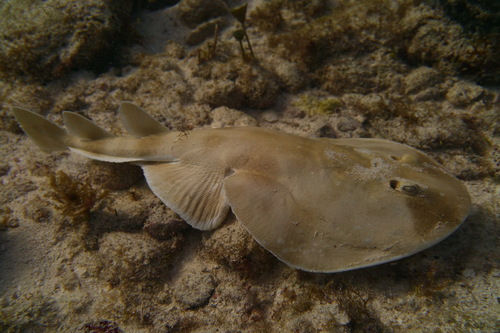
Caribbean Electric Ray
Narcine bancroftii
The Caribbean Electric Ray is a master of camouflage and a pint-sized powerhouse of the shallows. Known for its ability to deliver a startling bio-electric jolt, this 'numbfish' is a fascinating glimpse into the diversity of our coastal oceans.
Quick Identification
Size
Typically 15-30 cm (6-12 inches) in length, though large specimens can reach up to 45 cm (18 inches). They generally weigh less than 0.5 kg (1.1 lbs).
Colors
Dorsal surface is typically yellowish-orange or grayish-brown, covered in dark, irregular spots or rings. The underside is uniformly white or creamy white.
Key Features
- Two large, kidney-shaped electric organs visible on either side of the head
- Circular or oval pectoral disc that is slightly wider than it is long
- Short, thick tail equipped with two dorsal fins and a distinct caudal fin
- Absence of a stinging spine on the tail
When You’ll See Them
Geographic range
Where Does the Caribbean Electric Ray Live?
Native to the western Atlantic Ocean, the Caribbean Electric Ray is found from the coastal waters of North Carolina through the Gulf of Mexico and the Caribbean Sea, extending as far south as southern Brazil. It is a true coastal specialist, sticking close to the continental and island shelves of North, Central, and South America. While its distribution is wide, it is most densely concentrated in the warm, shallow tropical waters of the West Indies and the Brazilian coastline.
Basemap © OpenStreetMap contributors
Behavior
The Caribbean Electric Ray, often called the 'numbfish' or 'trembler,' is a slow-moving, bottom-dwelling species. It spends much of its daylight hours partially buried in the sand or mud of shallow coastal waters, using its mottled coloration as camouflage to avoid predators like larger sharks. While it appears lethargic, it possesses specialized muscles that function as bio-batteries, capable of delivering a 14 to 37-volt electric shock. This discharge is used primarily for defense and to stun small, soft-bodied prey.
These rays are generally solitary and non-aggressive toward humans. However, swimmers and snorkelers in the surf zone may accidentally step on them, resulting in a surprising but harmless jolt. Unlike stingrays, they lack a venomous barb, relying entirely on their electrical capacity for protection. They are most active during the night, emerging from the substrate to forage along the seafloor in search of food.
EverydayEarth exclusive
Camera Tips
Capturing the Caribbean Electric Ray requires a specialized underwater camera housing or a fixed reef-cam setup. Since these rays are shallow-water specialists, the best placement is in the 'wash' or surf zone, just beyond the breaking waves, where the water is 1 to 3 meters deep. Use a weighted tripod or a sand-auger mount to keep the camera steady against the tide. Angle the lens slightly downward to focus on the sandy substrate rather than the open water, as these rays spend most of their time hugging the bottom.
Because they are primarily nocturnal, external lighting is essential. Use a red-light filter or low-intensity wide-beam LED to illuminate the area without startling the wildlife. High-intensity white lights can wash out their subtle spots and may cause them to flee. Set your camera to a high frame rate (60fps) if you hope to capture the moment they emerge from the sand, which happens with a quick, fluttering motion.
To draw them into the frame, consider 'scenting' the area. While they aren't attracted to traditional fish bait like snapper or tuna, disturbing the sand slightly to expose polychaete worm burrows can pique their interest. If you are using a trail-cam style trigger, look for movement-based sensors that are optimized for underwater use, or simply use time-lapse mode during the first four hours after sunset.
Similar Species
Species that look similar or are commonly confused with Caribbean Electric Ray.
Southern Stingray
Much larger with an angular, diamond-shaped disc and a long, whip-like tail featuring a venomous spine.
Yellow Stingray
Similar in size and habitat, but has a distinct round shape and a short tail with a venomous barb rather than electric organs.
Bullseye Electric Ray
Found in the Pacific; features a single, prominent 'eye' spot in the center of its back rather than many small spots.
Frequently Asked Questions
Record Caribbean Electric Ray at your habitat
Connect a camera to start building your own species record — AI identifies every visitor automatically.