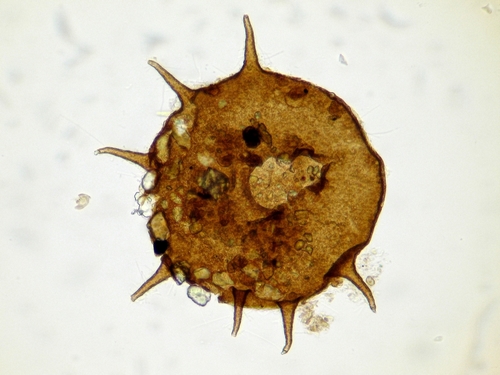
Centropyxis
Centropyxis aculeata
Meet the architect of the microscopic world. Centropyxis aculeata is a tiny, spiny 'shelled' amoeba that builds its own fortress out of sand and minerals right in your garden soil or pond.
Quick Identification
Size
100–200 micrometers (0.004–0.008 inches) in diameter
Colors
Variable from transparent to dark brown or grey; shell often appears speckled due to attached sand grains.
Key Features
- Flattened, cap-like shell (test) made of mineral particles
- 4 to 10 distinct spines protruding from the rear edge
- Single, off-center circular opening (aperture) on the underside
- Moves via slow, finger-like projections called lobopodia
When You’ll See Them
Loading activity data...
Behavior
Centropyxis aculeata is a fascinating member of the "micro-wildlife" community, specifically known as a testate amoeba. Unlike its more famous, blob-like cousins, this species is a master architect. It constructs a protective, flattened shell—called a test—by gathering tiny grains of sand and mineral debris from its environment and cementing them together with organic secretions. This shell acts as a fortress against predators and environmental stress.
These organisms are primarily solitary and spend their lives crawling through the film of water surrounding soil particles or submerged aquatic plants. They move with extreme deliberation, extending blunt, transparent appendages through the opening in their shell to pull themselves forward. While they are far too small to notice with the naked eye, they are vital components of the backyard ecosystem, helping to recycle nutrients and control bacterial populations in garden soil and ponds.
EverydayEarth exclusive
Camera Tips
Capturing Centropyxis aculeata requires a shift from traditional trail cameras to "micro-monitoring." To photograph these creatures, you will need a digital microscope camera or a high-magnification macro lens attachment for your smartphone. Because they are microscopic, you cannot simply point a camera at the ground; you must bring a sample of their habitat to the lens. The best method is to take a "moss squeeze"—collecting a handful of damp moss and squeezing the water into a small clear container or onto a glass slide.
For the best visual results, use backlighting. If using a digital microscope, place your light source beneath the sample so the light passes through the transparent parts of the amoeba's body, highlighting the internal structures and the texture of its sandy shell. If you are using a smartphone macro setup, try to position your sample on a glass surface with a bright LED positioned about an inch below it. This will make the spines (the "aculeata" in its name) stand out in sharp relief against the background.
Timing is less about the hour of day and more about moisture levels. The best time to "hunt" for Centropyxis is 24 to 48 hours after a heavy rain when the soil and moss are saturated. During dry spells, these organisms often go into a dormant state (encystment) and become much harder to identify. If you want to see them in action, keep your sample hydrated with dechlorinated water or rainwater, as tap water can sometimes be toxic to these delicate microbes.
To capture behavior like feeding or movement, use the time-lapse setting on your camera software. Because they move so slowly, a standard video will look like a still photo. Set your camera to take one frame every 5–10 seconds over the course of thirty minutes. When played back at normal speed, you will see the amoeba "crawling" across the screen and extending its lobopodia in a way that feels surprisingly animal-like. This unique perspective provides a window into the hidden jungle thriving in every square inch of your backyard.
Similar Species
Species that look similar or are commonly confused with Centropyxis.
Frequently Asked Questions
Record Centropyxis at your habitat
Connect a camera to start building your own species record — AI identifies every visitor automatically.