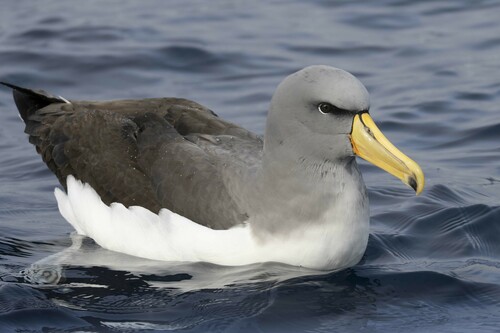
Chatham Albatross
Thalassarche eremita
The Chatham Albatross is a magnificent navigator that breeds on only one tiny rock in the world. With its striking grey hood and golden bill, it is a master of the southern winds and a rare jewel of the Pacific.
Quick Identification
Size
Length of 90 cm (35 in); wingspan of 220 cm (87 in); weight between 3.1 and 4.7 kg (6.8–10.4 lb)
Colors
Slate-grey head, neck, and upper back; white underparts; dark grey-black upperwings; bright yellow bill with a dark spot at the tip of the lower mandible
Key Features
- Distinctive dark grey hood and neck
- Bright orange-yellow bill with a dark tip
- Smallest member of the 'shy albatross' group
- Dark 'thumb-mark' at the base of the leading edge of the underwing
When You’ll See Them
Geographic range
Where Does the Chatham Albatross Live?
The Chatham Albatross is a true wanderer of the South Pacific, with its entire global breeding population concentrated on a single, steep-sided rock stack called The Pyramid in the Chatham Islands of New Zealand. When not tending to their nests, these birds range across a massive maritime territory that stretches from the southern waters of Australia across to the coast of South America. They are particularly common in the nutrient-rich Humboldt Current off Chile and Peru during the non-breeding season, making them a trans-Pacific icon of the high seas.
Basemap © OpenStreetMap contributors
Behavior
When foraging, they are opportunistic and bold. They are frequently seen following fishing vessels, where they compete aggressively with other seabirds for discarded scraps. On their breeding colony at The Pyramid, they exhibit complex social displays including bill-clacking and mutual preening to reinforce pair bonds. Despite their grace in the air, they are somewhat clumsy on land, requiring high ledges to launch themselves back into the wind.
EverydayEarth exclusive
Camera Tips
Capturing a Chatham Albatross on camera is a unique challenge because they are strictly pelagic. For those using trail cameras on coastal properties or during authorized research trips, the best placement is on high, windward-facing cliffs or ridges. These birds rely on updrafts to take off and land, so positioning your camera at a 'launch point' or overlooking a known nesting ledge will yield the best results. Set your camera at a height of about 2 to 3 feet to capture eye-level interactions.
Because these birds move with incredible speed when gliding, your camera settings are critical. Use a very high shutter speed (1/2000s or faster if manual controls are available) to avoid motion blur. If you are using an AI-powered camera like those from EverydayEarth, ensure the 'Bird' detection mode is active and set the trigger sensitivity to high. Wide-angle lenses are often better than telephotos for cliffside setups, as they capture the bird's massive wingspan and the dramatic oceanic background.
While we never recommend baiting wild albatrosses—as it can lead to dangerous habituation and interference with their natural diet—you can improve your chances of a 'visit' by placing your camera near natural features like prominent boulders that birds use for perching. The best lighting occurs during the 'golden hours' of dawn and dusk, which highlights the soft grey textures of their plumage against the dark sea. During the breeding season (September to April), activity is at its peak, providing the most frequent opportunities for high-quality footage.
Similar Species
Species that look similar or are commonly confused with Chatham Albatross.
Frequently Asked Questions
Record Chatham Albatross at your habitat
Connect a camera to start building your own species record — AI identifies every visitor automatically.