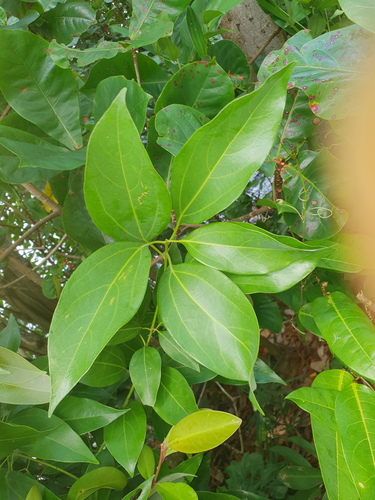
Chinese Cinnamon
Cinnamomum cassia
The Chinese Cinnamon is more than just a kitchen staple; it is a stunning subtropical evergreen with aromatic bark and vibrant red new growth. A cornerstone of Asian agroforestry, this tree supports a wide array of pollinators and provides a lush, fragrant canopy year-round.
Quick Identification
Size
A medium-sized evergreen tree reaching heights of 10–15 meters (33–49 feet) with a trunk diameter up to 60 centimeters (24 inches).
Colors
Greyish-brown thick bark; leathery, glossy deep-green leaves with reddish-pink new growth; small, pale yellow or cream-colored flowers.
Key Features
- Thick, rough grey-brown bark that is highly aromatic
- Leathery lance-shaped leaves with three distinct longitudinal veins
- Small yellowish-white flowers appearing in clusters (panicles)
- Produces small, dark purple drupe fruits resembling tiny acorns.
When You’ll See Them
Geographic range
Where Does the Chinese Cinnamon Live?
Native to the lush, subtropical regions of Southern China, the Chinese Cinnamon tree thrives in provinces such as Guangxi, Guangdong, and Yunnan. Its range naturally extends into the neighboring highlands of Northern Vietnam and Laos, where it remains a dominant feature of the forested landscape. Due to its high value as a spice, extensive naturalized and cultivated populations are now found across Southeast Asia, including Indonesia, Thailand, and parts of India.
Basemap © OpenStreetMap contributors
Behavior
Chinese Cinnamon, commonly known as Cassia, is a hardy evergreen tree known for its slow but steady growth and long lifespan. While it doesn't 'behave' in the animal sense, it interacts dynamically with its environment by releasing aromatic compounds that can deter certain herbivores while attracting specific pollinators. Its growth cycle is marked by a beautiful flush of reddish-pink new leaves that eventually harden into a deep, waxy green.
In its native and cultivated habitats, the tree is a focal point for local biodiversity. It provides dense canopy cover for nesting birds and serves as a vital food source for various moth and butterfly larvae. For humans, the tree is a cornerstone of agroforestry; the bark is traditionally harvested in strips every 10–15 years, a process that requires the tree to be coppiced or carefully managed to ensure regrowth.
EverydayEarth exclusive
Camera Tips
Capturing the Chinese Cinnamon on an AI-powered backyard or trail camera is a unique exercise in botanical monitoring. Unlike moving animals, the goal here is to document 'phenology'—the seasonal changes of the tree. To get the best results, mount your camera on a sturdy post or a neighboring tree approximately 5 to 7 feet off the ground, angled slightly downward to capture both the textured bark and the lower foliage. Use a time-lapse setting to record the fascinating transition of new leaf flushes, which turn from a vibrant red to a deep green over several weeks.
Because the tree is highly aromatic, it often attracts specific wildlife. Position your camera near the flowering panicles during early summer to catch pollinators like hoverflies, bees, and even small sunbirds. In late autumn, shift your focus toward the ripening fruit. The small purple berries are a magnet for frugivorous birds; setting your camera to 'Video' or 'Burst' mode with a high trigger sensitivity will help you catch these fast-moving visitors as they pluck the fruit.
Lighting is crucial for identifying Cinnamomum cassia. Try to position the camera so that the leaves receive dappled sunlight, which highlights the three characteristic longitudinal veins that distinguish it from other evergreens. If you are monitoring a young sapling, a ground-level stake mount is preferable to track its growth rate and any visits from nocturnal mammals that may browse the lower leaves or rub against the fragrant bark.
Similar Species
Species that look similar or are commonly confused with Chinese Cinnamon.
Frequently Asked Questions
Record Chinese Cinnamon at your habitat
Connect a camera to start building your own species record — AI identifies every visitor automatically.