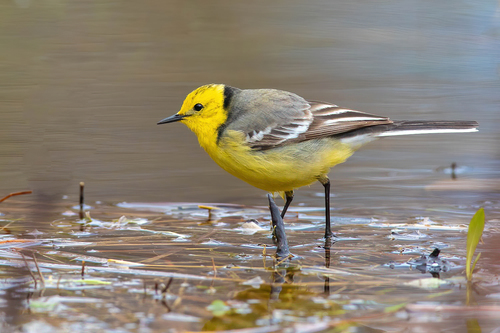
Citrine Wagtail
Motacilla citreola
A vibrant splash of yellow in the marshlands, the Citrine Wagtail is a master of the wetlands. Known for its rhythmic tail-pumping and long-distance migrations, this elegant songbird is a favorite for backyard observers near water.
Quick Identification
Size
Length: 15-17 cm (6-6.7 in); Wingspan: 24-28 cm (9.5-11 in); Weight: 18-25 g (0.6-0.9 oz)
Colors
Breeding males feature a brilliant lemon-yellow head and underparts with a black nape. Females and non-breeding males are duller with olive-grey backs, greyish crowns, and pale yellow highlights.
Key Features
- Bright yellow head and underparts in breeding males
- Double white wing bars on dark grey wings
- Long, slender black tail with white outer feathers
- Distinctive grey back, lacking the green tones of similar species
When You’ll See Them
Geographic range
Where Does the Citrine Wagtail Live?
The Citrine Wagtail is native to a broad expanse of the Palearctic, with its breeding grounds stretching from Eastern Europe through Central Asia into Northern China and Siberia. As a strongly migratory species, it travels south for the winter, settling across the Indian subcontinent and parts of Southeast Asia. While primarily an eastern species, it is increasingly recorded as a vagrant in Western Europe during the autumn migration months.
Basemap © OpenStreetMap contributors
Behavior
The Citrine Wagtail is an energetic and highly mobile songbird, instantly recognizable by its constant, rhythmic tail-pumping motion. It is primarily a ground-dwelling species, frequently seen running or darting across mudflats and damp vegetation. During the breeding season, males are quite conspicuous, singing from low perches such as shrubs or mounds to defend their territory in wet meadows or tundra environments.
These birds are mostly solitary or found in pairs while nesting, but they become much more social during the winter and migration periods. They can often be found in loose flocks, sometimes mixed with other wagtail species or pipits, foraging together in productive wetlands. They are generally wary of humans but can become accustomed to activity in agricultural areas where irrigation provides reliable feeding grounds.
EverydayEarth exclusive
Camera Tips
To capture the Citrine Wagtail on your trail camera, you must focus on their preference for open ground near water. Place your camera at a very low height—no more than 15 centimeters (6 inches) off the ground—to get an eye-level perspective of their foraging behavior. Aim the lens toward the muddy margins of a pond, a shallow birdbath, or a damp patch of lawn. A low angle not only captures the bird's intricate feather details but also highlights the iconic tail-wagging motion against a softer background.
Because they don't visit traditional seed feeders, water is your best attractant. A shallow water feature with a solar-powered 'wiggler' or a slow drip is highly effective, as the movement and sound of water are irresistible to wagtails. If you are setting up in a backyard, ensure the area around the water is clear of tall grass; these birds feel safest when they have a 360-degree view of potential predators while they drink or bathe.
Technically, you will want to use the fastest shutter speed your camera allows. The Citrine Wagtail is a fast mover, and its tail is in constant motion, which can lead to motion blur in low light. Early morning light is best, as it brings out the richness of the yellow plumage without the harsh glare of the midday sun. If using a motion-triggered camera, set the trigger interval to the shortest possible time to capture the bird's quick, darting runs across the frame.
Similar Species
Species that look similar or are commonly confused with Citrine Wagtail.
Frequently Asked Questions
Record Citrine Wagtail at your habitat
Connect a camera to start building your own species record — AI identifies every visitor automatically.