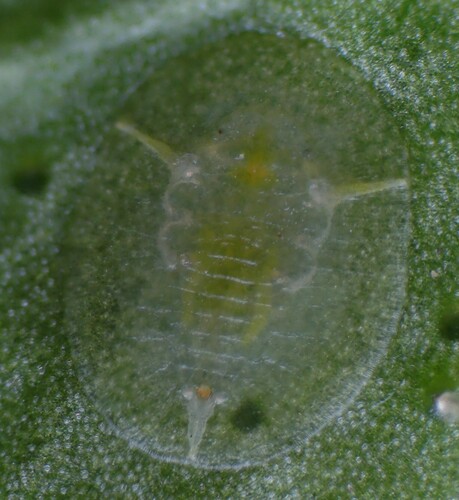
Citrus Whitefly
Dialeurodes citri
A tiny, snow-white marvel of the garden, the Citrus Whitefly creates miniature kingdoms on the underside of leaves. Watch as these 'dust-like' insects transform your backyard citrus trees into a bustling hub of activity.
Quick Identification
Size
Adults measure 1.5–2 mm (0.06–0.08 inches) in length with a wingspan of approximately 3 mm (0.12 inches)
Colors
Snow-white wings and body covered in a fine waxy powder; nymphs are nearly translucent or pale light green
Key Features
- Tiny moth-like appearance with four white wings
- Wings held in a flat, roof-like position over the body
- Elliptical, scale-like nymphs found on leaf undersides
- Cloud-like flight when host plants are disturbed
When You’ll See Them
Geographic range
Where Does the Citrus Whitefly Live?
The Citrus Whitefly is native to southern Asia, particularly India and China, where it evolved alongside native citrus species. It has since become a cosmopolitan traveler, establishing massive populations across the southern United States from Florida to California, as well as throughout Central and South America. In Europe, it is frequently encountered in Mediterranean countries where warm winters allow it to thrive in olive and citrus plantations.
Basemap © OpenStreetMap contributors
Behavior
The Citrus Whitefly is a highly social insect within its colonies, often found in massive numbers on the undersides of leaves. Despite their name, they are not true flies but are closely related to aphids and scales. They spend most of their life cycle as stationary nymphs, sucking sap from the host plant's vascular system. Adults are most active during the cooler parts of the day, frequently taking flight in fluttering 'clouds' if the foliage is shaken.
A defining behavior of this species is the excretion of honeydew—a sticky, sugar-rich liquid. This byproduct coats the leaves below the colony, which often leads to the growth of black sooty mold. While they do not bite humans, their presence in suburban backyards is often noticed due to this mold or the sudden appearance of white specks flying around gardenias and citrus trees during the spring and summer months.
EverydayEarth exclusive
Camera Tips
Capturing the Citrus Whitefly on a backyard camera requires a specialized approach due to their diminutive size. Standard trail cameras will likely miss them unless they have a dedicated macro mode or a close-focus lens attachment. For the best results, position your camera just 4 to 6 inches away from the underside of a leaf on a known host plant like a Gardenia or Lemon tree. Ensure the camera is stabilized on a tripod or a firm branch to avoid motion blur at this close range.
Lighting is your biggest challenge and best friend when filming whiteflies. Because they are bright white and somewhat reflective, direct midday sun can blow out the detail. Try to capture them in the soft, angled light of early morning or late afternoon. If your camera has a manual exposure setting, dial it down slightly to preserve the texture of their waxy wings. If you are looking to capture action, setting your camera to a high-frame-rate video mode can reveal the frantic, fluttering flight patterns that are too fast for the human eye to track.
To attract a large group for a 'hero shot,' look for the 'spring flush'—the period when host plants put out new, tender green growth. This is where females prefer to lay their eggs. If you want to trigger a 'cloud' effect for a dramatic video, you can set a timer-based recording and use a gentle mechanical vibrator or a simple string attached to a nearby branch to slightly shake the foliage, causing the adults to take flight simultaneously.
Similar Species
Species that look similar or are commonly confused with Citrus Whitefly.
Frequently Asked Questions
Record Citrus Whitefly at your habitat
Connect a camera to start building your own species record — AI identifies every visitor automatically.