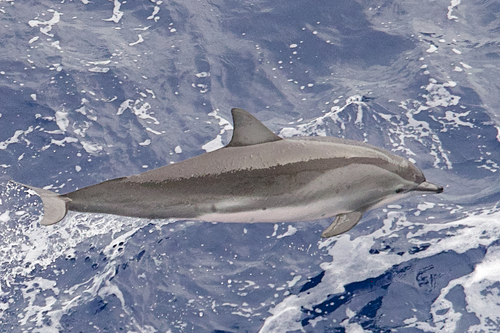
Clymene Dolphin
Stenella clymene
A rare Atlantic exclusive, the Clymene dolphin is the only marine mammal known to have evolved through hybrid speciation. Famous for its acrobatic spins and distinctive facial 'mustache,' this deep-water beauty is a crown jewel for ocean observers.
Quick Identification
Size
Length of 1.7 to 2 metres (5.6 to 6.6 feet); weight ranges from 75 to 90 kg (165 to 200 lbs)
Colors
Tri-partite shading with a dark grey dorsal cape, light grey flanks, and a white or pinkish belly; features a black 'mustache' on the rostrum
Key Features
- Distinct black 'mustache' marking on the upper snout
- Short, stubby rostrum compared to other Stenella species
- Tri-tone color pattern with a dipping grey cape
- Frequent aerial spinning and breaching behavior
When You’ll See Them
Geographic range
Where Does the Clymene Dolphin Live?
The Clymene dolphin is found exclusively in the tropical and subtropical waters of the Atlantic Ocean. Its range extends from the mid-Atlantic coast of the United States and the Gulf of Mexico down to southern Brazil, and across to the western coast of Africa from Mauritania to Angola. These dolphins are true oceanic wanderers, preferring deep-water environments far from the coastline.
Basemap © OpenStreetMap contributors
Behavior
Clymene dolphins are highly social and energetic marine mammals, typically traveling in pods that range from 50 to over 200 individuals. They are renowned for their aerial acrobatics, particularly their ability to leap from the water and spin on their longitudinal axis. While this behavior is similar to the Spinner Dolphin, the Clymene's spins are generally less frequent and slightly less complex. They are a curious species, often approaching vessels to bow-ride, providing excellent observation opportunities for those in offshore waters.
These dolphins are primarily nocturnal hunters, spending their daylight hours resting or socializing in deep waters before moving closer to the surface at night to feed. They are known to be communal and are occasionally spotted in mixed-species schools alongside Common Dolphins or Spinner Dolphins. Because they are deep-water specialists, their interactions with humans are largely limited to encounters with offshore boaters and researchers.
EverydayEarth exclusive
Camera Tips
Capturing the Clymene dolphin requires a specialized approach since they are deep-water residents. For those with coastal properties overlooking deep trenches or boat-based setups, use a high-speed trigger camera with a polarized lens filter. This filter is essential to cut through the ocean's surface glare, allowing the AI to better distinguish the dolphin's unique tripartite color pattern and 'mustache' marking. Mount your camera at a slight downward angle, roughly 10-15 feet above the water line, to capture the best angle of their frequent leaps and spins.
While you can't 'bait' dolphins in the traditional sense, they are naturally attracted to the pressure waves of moving vessels. If using a mobile camera rig on a boat, set your AI to trigger on 'fast motion' or 'splashes.' The best time for clear photography is mid-morning when the sun is high enough to illuminate the water but not yet creating a blinding overhead reflection. In the Gulf of Mexico or the Caribbean, the water clarity often allows for stunning shots if your camera is housed in a waterproof gimbal-stabilized unit.
For the most consistent results, focus your monitoring during the summer months when sea states are generally calmer. Rough water makes it difficult for AI models to differentiate a dorsal fin from a whitecap. Adjust your shutter speed to at least 1/2000 of a second to freeze the action during a 360-degree spin. If you are using a fixed offshore platform or buoy-mounted camera, ensure the lens is treated with a hydrophobic coating to prevent salt spray from blurring your shots.
Similar Species
Species that look similar or are commonly confused with Clymene Dolphin.
Frequently Asked Questions
Record Clymene Dolphin at your habitat
Connect a camera to start building your own species record — AI identifies every visitor automatically.