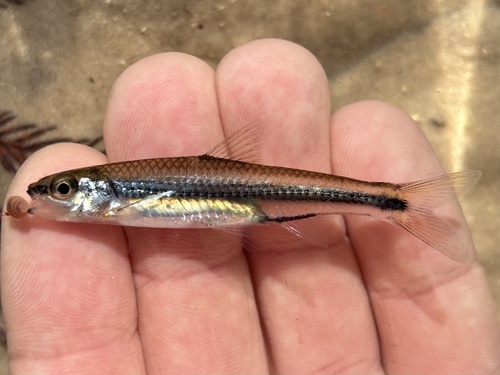
Coastal Shiner
Alburnops petersoni
Meet the Coastal Shiner, a glimmering resident of the American Southeast's blackwater rivers and sun-drenched creeks. This resilient little minnow is a master of the coastal plains, darting through underwater forests of eelgrass.
Quick Identification
Size
Typically 5-8 cm (2-3.2 inches) in length; maximum length reaches about 10 cm (4 inches).
Colors
Shimmering silver to pale olive body; a prominent dark lateral stripe runs from the snout through the eye to the base of the tail.
Key Features
- Distinct dark lateral band extending to the tail
- Blunt, rounded snout
- Clear to dusky fins with 7-8 anal rays
- Slender, torpedo-shaped body
When You’ll See Them
Geographic range
Where Does the Coastal Shiner Live?
This shimmering minnow is native to the southeastern United States, specifically the Atlantic and Gulf Slope drainages. Its core territory stretches from the Cape Fear and Waccamaw river systems in North Carolina down through the entirety of the Florida peninsula, extending westward along the Gulf Coast to the Jordan River in Mississippi. Within this humid coastal plain, the species thrives in the unique tea-colored blackwater environments common to the Deep South.
Basemap © OpenStreetMap contributors
Behavior
These fish are opportunistic feeders, spending much of their time scanning the water column for drifting nutrients or picking at the substrate. Their behavior changes slightly during the breeding season when they may congregate more densely in shallow, well-oxygenated areas. In the wild, they are an essential link in the food chain, serving as a primary food source for larger predatory fish and wading birds like herons.
EverydayEarth exclusive
Camera Tips
Baiting can significantly improve your chances of getting a high-quality recording. A small mesh bag filled with crushed fish flakes or breadcrumbs secured directly in front of the lens will draw a school into the frame. Ensure the bait bag is slightly out of focus or positioned off to the side so it doesn't dominate the image. Because they are most active when the sun is high, aim for setups that catch midday light; the sun's rays penetrate the water best during these hours, making their scales shimmer brilliantly.
For settings, use a high frame rate—at least 60fps—if your camera allows, as their darting movements can appear blurry at lower speeds. If you are using a trigger-based trail camera, set the sensitivity to its highest level and use a burst mode of 3-5 photos to ensure you catch the movement. In the darker 'blackwater' environments of the South, you may need to adjust your exposure settings to +0.5 or +1.0 to prevent the dark tannins in the water from making the fish look like dark silhouettes.
Similar Species
Species that look similar or are commonly confused with Coastal Shiner.
Frequently Asked Questions
Record Coastal Shiner at your habitat
Connect a camera to start building your own species record — AI identifies every visitor automatically.