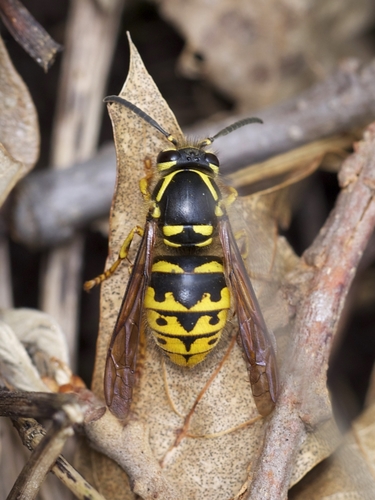
Common Aerial Yellowjacket
Dolichovespula arenaria
The Common Aerial Yellowjacket is nature’s master paper-maker and a tireless guardian of the garden. Known for its impressive hanging nests and striking yellow-and-black patterns, this social wasp is a fascinating subject for any backyard observer.
Quick Identification
Size
Workers range from 10–12 mm (0.4–0.5 in), while queens are larger, reaching 18–20 mm (0.7–0.8 in).
Colors
Bright yellow and black bands; abdomen often features black 'triangles' or 'V' shapes pointing toward the rear. Workers and queens share similar patterns, but queens are significantly bulkier.
Key Features
- Large papery aerial nests built in trees or on buildings
- Two small black spots or a thin vertical bar on the face
- Distinct yellow 'breaks' in the black bands of the abdomen
- Hunched, robust thorax with yellow markings
When You’ll See Them
Geographic range
Where Does the Common Aerial Yellowjacket Live?
The Common Aerial Yellowjacket is a true North American native, boasting a massive range that stretches from the subarctic regions of Alaska and across the entire breadth of Canada. In the United States, they are found from the Pacific Northwest down through the Rocky Mountains and across the Great Lakes to the Atlantic coast. While they prefer temperate climates, they have successfully adapted to a variety of environments, making them one of the most frequently encountered yellowjackets in North American backyards and parks.
Basemap © OpenStreetMap contributors
Behavior
The Common Aerial Yellowjacket is a highly social insect that lives in a complex colony structure. Each spring, a solitary queen emerges from hibernation to begin the monumental task of building a nest from chewed wood fibers. Unlike many other yellowjackets that nest underground, this species is a master architect of the air, creating the iconic grey, papery 'football' nests often seen hanging from tree branches or tucked under the eaves of suburban homes.
While they have a reputation for being aggressive, Common Aerial Yellowjackets are generally more docile than their ground-nesting cousins, provided their nest is not disturbed. Within the colony, workers are tireless foragers, hunting for protein to feed the developing larvae. They are also beneficial to gardeners, as they act as a natural pest control service by preying on flies, caterpillars, and spiders. However, as summer wanes, their diet shifts toward sugars, which is when they are most likely to interact with humans at picnics or around fallen fruit.
EverydayEarth exclusive
Camera Tips
To capture high-quality footage of Common Aerial Yellowjackets, focus your camera on high-traffic areas like flowering plants or sources of wood fiber. Because these wasps chew weathered wood to make their nests, placing a camera near an old cedar fence or unpainted garden shed during the spring can yield fascinating videos of 'scraping' behavior. Set your camera to a macro or close-up mode if available, as these insects move quickly and are relatively small.
Placement is key for aerial species. If you locate a nest, position your camera on a tripod at a safe distance (at least 5-10 feet) and use a zoom lens to frame the entrance hole. The peak activity occurs during the warmest part of the day when workers are constantly coming and going. Avoid using a flash at night, as it may disturb the colony or attract other nocturnal insects that could obscure the lens. Instead, rely on natural sunlight, which beautifully highlights the iridescent quality of their wings and the vivid yellow of their carapaces.
If you want to draw them into a specific frame, a 'lure' of overripe fruit like peaches or plums works wonders in late summer. Place the fruit on a raised platform or a fence post in a sunny spot. For the best results, use a high frame rate (60fps or higher) to capture the intricate details of their flight mechanics, which are often too fast for the human eye to track. Always remember to maintain a respectful distance from active nests to avoid stings and ensure the colony continues its natural behavior undisturbed.
Similar Species
Species that look similar or are commonly confused with Common Aerial Yellowjacket.
Frequently Asked Questions
Record Common Aerial Yellowjacket at your habitat
Connect a camera to start building your own species record — AI identifies every visitor automatically.