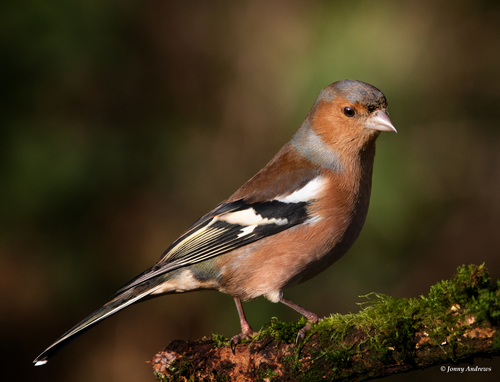
Common Chaffinch
Fringilla coelebs
With its slate-blue cap and rosy breast, the Common Chaffinch is a vibrant staple of the backyard landscape. Known for its loud, cheerful song and distinctive double wing bars, this hardy finch is a delight for birdwatchers and AI-camera enthusiasts alike.
Quick Identification
Size
Length: 14.5 cm (5.7 in); Wingspan: 24.5–28.5 cm (9.6–11.2 in); Weight: 18–29 g (0.63–1.02 oz)
Colors
Males feature a striking slate-blue crown and nape with a rust-red or pinkish breast and cheeks. Females and juveniles are a more camouflaged olive-brown, but both sexes display two prominent white wing bars.
Key Features
- Slate-blue cap and rust-red chest on males
- Two distinct white wing bars on both sexes
- White outer tail feathers visible during flight
- Stout, conical seed-cracking bill
When You’ll See Them
Geographic range
Where Does the Common Chaffinch Live?
The Common Chaffinch is native to the vast majority of Europe, extending eastward across Western Asia and southward into parts of North Africa. It is one of the most abundant and widespread passerines across the United Kingdom and Scandinavia, thriving in almost any environment with trees or shrubs. Beyond its native range, thriving introduced populations have become well-established in New Zealand and the Western Cape of South Africa.
Basemap © OpenStreetMap contributors
Behavior
During the spring, the male's behavior shifts dramatically as he becomes highly territorial. He will choose a high, prominent perch—often the top of a tree or a tall shrub—to deliver his loud, cascading song. This song is used both to attract a mate and to warn off rivals. Unlike some other finches that feed their young on seeds, Chaffinches are diligent parents that forage for protein-rich caterpillars and insects to ensure their chicks grow quickly.
EverydayEarth exclusive
Camera Tips
Baiting is highly effective for this species. Scatter a handful of sunflower hearts, kibbled peanuts, or a high-quality 'no-grow' seed mix directly on the ground within the camera's focal range. During the winter, they are especially attracted to oily seeds that provide high caloric value. If you have a flat bird table, this is another excellent mounting location, as Chaffinches feel more comfortable landing on a stable, wide surface than on a thin perching wire.
For the best lighting, aim your camera to face north or south to avoid the harsh glare of the rising or setting sun, which can wash out the subtle pinks and blues of the male's plumage. Because these birds are quite 'flighty' and move their heads with rapid, jerky motions, set your camera to its highest trigger speed and shortest video interval. Early morning, just after sunrise, is the peak time for activity; Chaffinches are often among the first birds to begin foraging as the light breaks.
In the spring, you can attract them into the camera's frame by providing a shallow water source or bird bath. They are vigorous bathers, and the splashing movement is a reliable trigger for motion-activated cameras. If you are using an AI camera with species recognition, ensure the lens is clean and free of spiderwebs, as the fine white wing bars—a key identification feature for the AI—need to be clearly visible for an accurate log.
Similar Species
Species that look similar or are commonly confused with Common Chaffinch.
Frequently Asked Questions
Record Common Chaffinch at your habitat
Connect a camera to start building your own species record — AI identifies every visitor automatically.