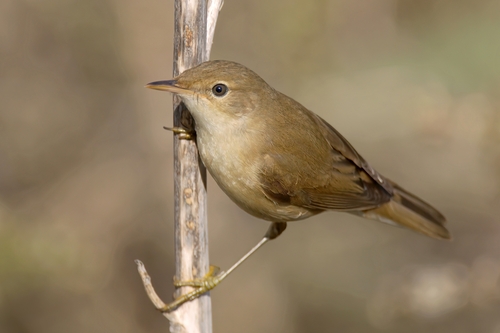
Common Reed Warbler
Acrocephalus scirpaceus
A master of the marshes, the Common Reed Warbler is best known for its rhythmic chattering and its incredible architectural feat of weaving nests between swaying reed stems.
Quick Identification
Size
Length: 12.5-14 cm (5-5.5 inches); Wingspan: 17-21 cm (6.7-8.3 inches); Weight: 10-15 g (0.35-0.53 oz)
Colors
Warm unstreaked brown upperparts, creamy-white or buff underparts, pale throat, and a faint pale eye-stripe. Legs are grayish-brown or dark flesh color.
Key Features
- Uniform brown back without streaks
- Pale buff-colored flanks and creamy underparts
- Relatively long, pointed bill with a dark tip
- Distinctive rhythmic, chattering song performed from within reeds
When You’ll See Them
Geographic range
Where Does the Common Reed Warbler Live?
The Common Reed Warbler is a true globetrotter, native to a vast stretch of the temperate western Palaearctic, spanning from Western Europe and North Africa across to Central Asia. During the autumn, European populations embark on an epic migration to winter in sub-Saharan Africa, while some populations remain year-round residents in the African tropics. In its core breeding range, you will find it in almost every suitable wetland from the United Kingdom and Spain all the way to Kazakhstan.
Basemap © OpenStreetMap contributors
Behavior
During the breeding season, these warblers are famous for their intricate basket nests, which they weave between three or four supporting reed stalks. They are notably vocal and territorial, though they generally tolerate human presence as long as their watery habitat remains undisturbed. They are also a frequent host for the Common Cuckoo, which often lays its eggs in the warbler's nest, forcing the smaller birds to raise a giant intruder.
EverydayEarth exclusive
Camera Tips
If you have a backyard pond with tall grasses or reeds, you can encourage them to visit by providing a shallow water feature. Unlike many garden birds, they aren't attracted to traditional feeders, but a healthy, pesticide-free garden that supports insect life is essential. Try to set your camera to trigger on small movements, as these birds are lightweight and may not trip sensors calibrated for larger mammals.
Early morning is the golden hour for these birds. Their activity peaks just after sunrise when they are most vocal and active in search of insects. During the nesting season (May to July in Europe), look for birds carrying nesting material or insects; however, ensure your camera placement never disturbs a nesting site, as this species is sensitive to intrusion during the incubation period.
Similar Species
Species that look similar or are commonly confused with Common Reed Warbler.
Marsh Warbler
Almost identical visually, but the Marsh Warbler has a much more musical, mimetic song and slightly longer wings.
Sedge Warbler
Easily distinguished by its bold creamy eye-stripe (supercilium) and heavily streaked crown and back.
Great Reed Warbler
Significantly larger (thrush-sized) with a much louder, harsher, and more croaking song.
Frequently Asked Questions
Record Common Reed Warbler at your habitat
Connect a camera to start building your own species record — AI identifies every visitor automatically.