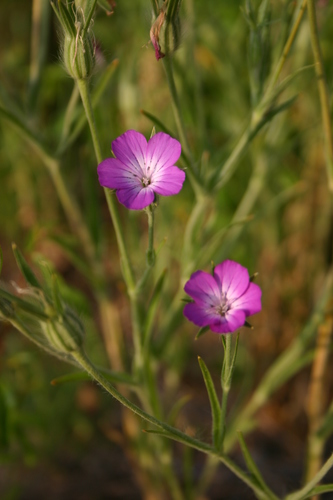
corn cockle
Agrostemma githago
A striking heritage wildflower with vibrant magenta blooms, the corn cockle is a historic companion to grain fields and a magnet for beautiful pollinators.
Quick Identification
Size
Stands 60–100 cm (24–40 in) tall; flowers are 2.5–5 cm (1–2 in) in diameter
Colors
Deep magenta to purple-pink petals with fine black dotted lines; foliage is a distinctive silvery-grey green
Key Features
- Five long, narrow sepals that extend significantly past the petals
- Radiating lines of dark spots on the petals leading to a white center
- Stems and leaves covered in soft, silvery hairs
- Upright, slender habit with opposite leaf arrangement
When You’ll See Them
Geographic range
Where Does the corn cockle Live?
Originally native to the Mediterranean region and parts of Western Asia, the corn cockle expanded its range across Europe following the spread of early agriculture. Today, it has been introduced and naturalized across much of North America, parts of South America, and Australia. While modern farming practices have made it rare in its traditional agricultural haunts, it remains a popular choice for wildflower meadows and conservation strips globally.
Basemap © OpenStreetMap contributors
Behavior
During the day, the flowers open wide to provide a landing platform for pollinators, particularly long-tongued insects. Despite its beauty, the plant is known for its high concentration of saponins, particularly in the seeds. This chemical defense makes the plant toxic if ingested, a trait that once made it a significant concern for farmers when its seeds accidentally contaminated flour. In a garden or meadow setting, it is a graceful, swaying presence that adds height and vibrant color to the landscape.
EverydayEarth exclusive
Camera Tips
Since corn cockles are a major draw for pollinators, focus your camera on a cluster of flowers rather than a single bloom. Use a fast shutter speed or high-frame-rate video setting to catch the rapid wingbeats of visiting butterflies and clearwing moths. The best time for filming is mid-morning, between 9 AM and 11 AM, when the flowers are fully open and insect activity is at its peak. If your camera supports it, enable the 'Macro' or 'Close-up' mode to highlight the fine, silvery hairs on the stem, which provide a beautiful texture in the soft light of dawn or dusk.
For a unique perspective, consider setting up a time-lapse over several weeks during late spring. You can document the dramatic 'opening' of the flower from its long-sepaled bud, a process that is visually stunning when sped up. Avoid using infrared flash at night if you are focusing on the plant itself, as the reflective hairs on the stem can cause overexposure; instead, rely on natural daylight to bring out the true, saturated pink-purple hues that define the species.
Similar Species
Species that look similar or are commonly confused with corn cockle.
Rose Campion
Rose campion has felt-like, silver leaves and flowers without the long, protruding sepals or dark dotted lines characteristic of corn cockle.
Cornflower
Though they share the 'corn' name, cornflowers are typically bright blue and have a composite flower head rather than the five-petaled structure of the cockle.
Frequently Asked Questions
Record corn cockle at your habitat
Connect a camera to start building your own species record — AI identifies every visitor automatically.