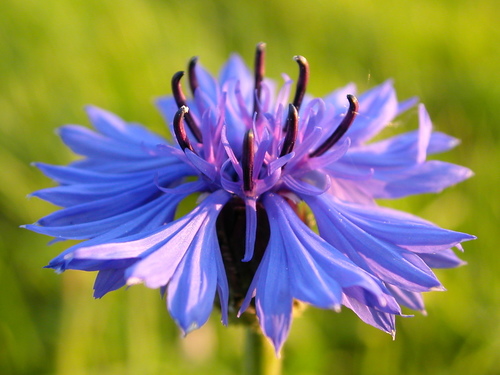
Cornflower
Centaurea cyanus
A striking splash of electric blue in the summer meadow, the Cornflower is the ultimate pollinator magnet. Once a staple of the European countryside, this resilient wildflower is now a backyard favorite for capturing stunning insect activity.
Quick Identification
Size
Stems reach 40–90 cm (16–35 inches) tall; flower heads are 1.5–3 cm (0.6–1.2 inches) wide.
Colors
Intense 'cornflower blue' outer florets with a darker purple-blue center; foliage is a distinctive grey-green.
Key Features
- Electric blue star-shaped flower heads
- Lacy, lance-shaped leaves with a silvery-grey down
- Wiry, slender stems that are often branched
- Bracts under the flower head have a blackish-brown fringed edge
When You’ll See Them
Geographic range
Where Does the Cornflower Live?
Originally native to the temperate regions of Europe and Western Asia, the Cornflower has spent centuries following human agriculture across the globe. It is now widely naturalized throughout North America, where it can be found from the southern United States up into Canada, as well as parts of Australia and New Zealand. While its numbers have declined in its native European cornfields due to modern farming practices, it remains a common and cherished sight in wildflower meadows and home gardens worldwide.
Basemap © OpenStreetMap contributors
Behavior
The Cornflower is a hardy annual plant that follows a rapid growth cycle, germinating in either autumn or spring to produce its famous blooms by mid-summer. As a heliophilous species, it thrives in full sunlight, with its flower heads opening wide during the day to maximize exposure and closing slightly at night or during heavy rain to protect its pollen.
Known for its prolific nectar production, the Cornflower acts as a social hub for backyard wildlife. It is highly attractive to honeybees, bumblebees, and various species of butterflies and hoverflies. While it was once considered a common 'weed' in agricultural fields, it has transitioned into a beloved garden ornamental that plays a critical role in supporting pollinator corridors in suburban environments.
EverydayEarth exclusive
Camera Tips
To capture the stunning detail of a Cornflower on a trail or backyard camera, use a macro lens or a camera with a close-focusing distance of at least 15-30 cm. Because the stems are wiry and move easily in the wind, place your camera on a stable tripod or a low-profile ground mount to prevent motion blur. If your camera allows for manual settings, a fast shutter speed (1/500s or higher) is essential to freeze the movement caused by summer breezes.
Position your camera at a 45-degree angle looking slightly upward toward the flower head. This 'insect's-eye view' not only captures the electric blue of the petals against the sky but also puts you in the perfect position to photograph the many pollinators that visit the plant. Aim for a spot that receives full morning sun; the 'golden hour' light around 7-9 AM provides the best saturation for that iconic blue color without harsh highlights.
Consider setting your camera to 'Burst Mode' or 'Timelapse' rather than a single trigger. Pollinators like the Painted Lady butterfly or Bumblebees move quickly between florets, and a sequence of shots increases your chances of getting a perfectly framed wildlife interaction. Since the plant itself is the attractant, no additional lures are needed, but keeping the surrounding grass trimmed will ensure your camera's motion sensor isn't triggered by non-target vegetation.
Similar Species
Species that look similar or are commonly confused with Cornflower.
Frequently Asked Questions
Record Cornflower at your habitat
Connect a camera to start building your own species record — AI identifies every visitor automatically.