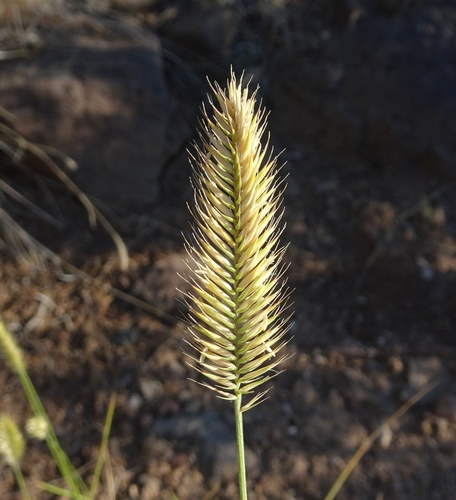
Crested Wheatgrass
Agropyron cristatum
A resilient survivor of the northern plains, Crested Wheatgrass is famous for its distinctive comb-shaped seed heads and its ability to thrive where other plants fail. It’s a vital early-spring anchor for backyard ecosystems, offering shelter and sustenance to a wide variety of prairie visitors.
Quick Identification
Size
Stands 30–90 cm (12–36 inches) tall with seed heads 2–7 cm (0.8–2.8 inches) in length
Colors
Bright green to bluish-green during the spring growing season, maturing to a pale gold or straw color by mid-summer
Key Features
- Flattened, spike-like seed heads with a distinct comb-like (pectinate) shape
- Densely tufted bunchgrass habit without creeping rhizomes
- Spikelets spread widely from the central stem at a 45 to 90-degree angle
- Rough-textured leaf blades about 2-6mm wide
When You’ll See Them
Geographic range
Where Does the Crested Wheatgrass Live?
Crested Wheatgrass is native to the vast cold-temperate steppes of Eurasia, spanning from eastern Europe through Russia, Siberia, and into Mongolia and Northern China. Following its introduction to North America in the early 20th century, it has become a staple of the Great Plains and the Intermountain West, particularly across the United States and Canada. This hardy grass is now firmly established in nearly every arid and semi-arid region of the northern hemisphere where temperate conditions prevail.
Basemap © OpenStreetMap contributors
Behavior
Crested Wheatgrass is a cool-season perennial bunchgrass known for its remarkable early-season growth. It is often the first greenery to emerge on the plains after the winter snow melts, providing a critical early food source for local wildlife and livestock. Unlike many native grasses that grow slowly, this species establishes itself aggressively, forming dense clumps that can live for over 30 years.
As the season progresses and temperatures rise, the plant enters a period of dormancy. Its seed heads, which resemble small, flattened wheat stalks or combs, are highly wind-resistant and can persist on the stem through much of the winter. In a backyard setting, it acts as a 'nursery' plant, providing structural cover for ground-nesting birds and small mammals that seek shelter from aerial predators.
EverydayEarth exclusive
Camera Tips
When setting up a camera to capture Crested Wheatgrass, focus on the unique geometry of the seed heads. Use a macro lens or a close-up focus setting to highlight the comb-like 'teeth' of the spikelets. Because this grass is a magnet for insects and birds, positioning your camera at a low 'worm’s-eye' view (about 6-12 inches off the ground) will allow you to capture the drama of the local ecosystem moving through the grass stalks.
For the best visual results, time your captures for the 'golden hour'—the hour after sunrise or before sunset. The low sun angle backlights the awns and seed heads, creating a glowing halo effect that makes the grass pop against darker backgrounds. If your camera has a time-lapse feature, record the grass over a 24-hour period; you will be amazed to see how the stalks sway and respond to wind patterns and humidity changes.
If you are using an AI-powered trail camera to spot animals, place the camera on the edge of a Crested Wheatgrass patch looking inward. Small mammals like voles and ground squirrels use the dense clumps for travel corridors, and birds like Meadowlarks often perch on the sturdy stalks. Avoid placing the camera directly in thick grass where the wind might cause 'false triggers' from moving blades; instead, aim for a clear patch looking toward the grass line where activity is most concentrated.
Similar Species
Species that look similar or are commonly confused with Crested Wheatgrass.
Frequently Asked Questions
Record Crested Wheatgrass at your habitat
Connect a camera to start building your own species record — AI identifies every visitor automatically.