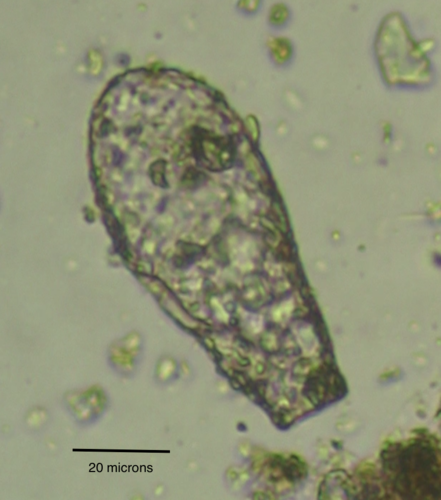
Difflugia oblonga
Difflugia oblonga
The ultimate microscopic architect, Difflugia oblonga builds a stunning suit of armor from grains of sand. Explore the hidden world of your backyard pond to find this master of construction.
Quick Identification
Size
100–500 micrometers (0.004–0.02 inches) in length
Colors
Sandy brown, gray, or tan depending on the color of local sediment and mineral particles used in shell construction
Key Features
- Oblong or pear-shaped protective shell (test)
- Shell composed of cemented sand grains and mineral debris
- Single opening called a pseudostome at the narrow end
- Clear, finger-like pseudopodia used for movement and feeding
When You’ll See Them
Geographic range
Where Does the Difflugia oblonga Live?
Native to nearly every continent except Antarctica, Difflugia oblonga is a truly cosmopolitan species found in freshwater ecosystems worldwide. It is exceptionally common across North America, Europe, and Asia, thriving in any stable body of water from massive Great Lakes to small, ornamental backyard ponds. Its ability to form a dormant, protective cyst allows it to survive the drying of its habitat and be transported over long distances by wind or on the feet of traveling waterfowl, ensuring its presence in almost any healthy aquatic environment.
Basemap © OpenStreetMap contributors
Behavior
Difflugia oblonga is a remarkable single-celled organism known for its architectural prowess. Unlike many other amoebae that are soft-bodied, this species constructs a protective shell, known as a 'test,' by meticulously selecting and gathering tiny grains of sand and mineral particles from its environment. It glues these particles together using a specialized organic cement produced within its cell, creating a rugged suit of armor that protects it from microscopic predators.
This species is a slow-moving inhabitant of the 'benthos,' the bottom layer of water bodies. It moves using lobose pseudopodia—blunt, finger-like extensions of its cytoplasm that stretch out from the shell's opening to anchor and pull the organism forward. Despite being a single cell, Difflugia oblonga exhibits complex behavior in its selective preference for certain sizes and shapes of sand grains, ensuring its shell is both sturdy and hydrodynamic.
EverydayEarth exclusive
Camera Tips
Capturing Difflugia oblonga requires specialized equipment, as they are far too small for standard trail cameras. To discover these microscopic architects in your backyard, you will need a digital microscope or a high-quality macro lens attachment for your smartphone. The best method is to collect a small sample of 'pond squeeze'—take a handful of submerged moss or a scoop of the topmost layer of sediment from your pond and squeeze the liquid into a jar. Place a single drop of this liquid onto a glass slide for observation.
When filming, stability is your best friend. Use a microscope stand or a tripod for your smartphone to avoid shakes at high magnification. For the most dramatic footage, use 'darkfield' or 'oblique' lighting; this causes the sand grains of the shell to sparkle and highlights the translucent, glass-like pseudopodia as they reach out. This lighting technique makes the organism pop against a dark background, making it easier for AI-powered identification tools to recognize the distinct pear-shaped profile.
Because they move slowly, time-lapse photography is an excellent way to showcase their behavior. Set your camera to take a frame every 2-5 seconds over a period of 10 minutes to see the organism 'walk' across the slide. Be mindful of the heat from your microscope light, which can dry out the slide; use a coverslip and occasionally add a drop of pond water to the edge of the slide to keep your subject active and healthy during the shoot.
Similar Species
Species that look similar or are commonly confused with Difflugia oblonga.
Frequently Asked Questions
Record Difflugia oblonga at your habitat
Connect a camera to start building your own species record — AI identifies every visitor automatically.