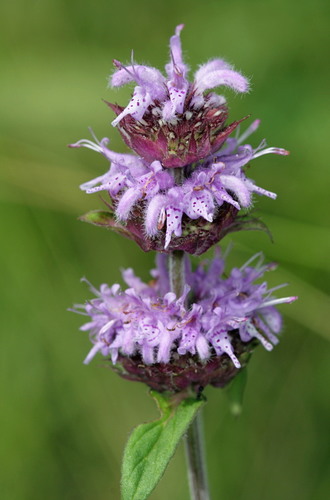
downy pagoda plant
Blephilia ciliata
The Downy Pagoda Plant is a stunning native wildflower known for its unique stacked blooms and its incredible ability to attract a diverse array of pollinators.
Quick Identification
Size
Stands 30-60 cm (12-24 inches) tall with a spread of 15-30 cm (6-12 inches)
Colors
Soft lavender to light blue flowers with purple spotting; foliage is a dusty gray-green due to fine downy hairs
Key Features
- Distinctive tiered flower clusters resembling a pagoda
- Square stems typical of the mint family
- Grayish-green leaves with fine, downy hairs
- Aromatic foliage that smells like mint or oregano when crushed
When You’ll See Them
Geographic range
Where Does the downy pagoda plant Live?
Downy pagoda plant is native to the central and eastern regions of North America. Its core range spans from Massachusetts westward to Kansas, extending as far south as Georgia and Arkansas. While it is widely distributed across the Midwestern United States and the Ohio River Valley, it is particularly fond of regions with limestone-rich soils, where it can often be found in large, shimmering colonies along forest edges.
Basemap © OpenStreetMap contributors
Behavior
The downy pagoda plant is a clump-forming perennial that brings architectural interest to the garden with its unique, stacked flowering habit. Unlike many of its aggressive mint-family cousins, this species stays relatively well-behaved, expanding slowly via short rhizomes rather than taking over a flower bed. It is a vital member of the mid-summer ecosystem, acting as a reliable nectar source when other spring blooms have faded.
Interaction with wildlife is the hallmark of this plant's behavior. It is specifically adapted to attract long-tongued bees, including bumblebees and honeybees, which are the primary pollinators. It also serves as a host plant for several moth species. While it is unpalatable to deer and rabbits due to its aromatic oils, it is a hive of activity during the daylight hours when temperatures are warm enough for insect flight.
EverydayEarth exclusive
Camera Tips
To capture the best images of the downy pagoda plant, place your camera on a low-profile stake or tripod approximately 18 to 24 inches from the ground. This allows you to focus directly on the 'pagoda' tiers where the flowers bloom. If you are using a trigger-based camera to capture visiting pollinators, ensure the sensor is aimed at the middle tier of the flower spike, as this is where bees and butterflies spend the most time foraging.
Lighting is crucial for this species; the 'downy' namesake comes from fine hairs on the stem and leaves that catch the light beautifully during the golden hours. Aim for a camera angle that allows early morning or late afternoon sun to back-light the plant, which will create a soft halo effect around the stems. This also helps highlight the delicate purple spots inside the lavender flowers that are otherwise difficult to see in flat midday light.
If your camera has a time-lapse mode, use it during the peak blooming weeks of June. This can reveal the fascinating way the individual flowers within each tier open in succession. For those looking to capture wildlife interactions, set your trigger speed to the fastest possible setting; many of the visiting clearwing moths and native bees move rapidly between the stacked blossoms.
Avoid placing the camera too close if you are in a windy area, as the tall, slender stems tend to sway. A slightly wider frame will prevent the plant from moving out of focus during a breeze. If you are monitoring the plant's health or growth, a photo taken once every 24 hours from a fixed position will provide a wonderful record of its seasonal progression from a gray-green rosette to a towering purple spire.
Similar Species
Species that look similar or are commonly confused with downy pagoda plant.
Frequently Asked Questions
Record downy pagoda plant at your habitat
Connect a camera to start building your own species record — AI identifies every visitor automatically.