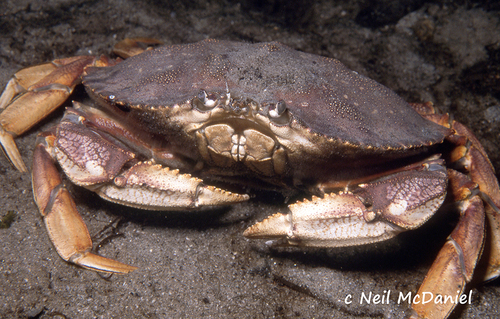
Dungeness Crab
Metacarcinus magister
A coastal icon of the Pacific Northwest, the Dungeness Crab is as famous for its sweet meat as it is for its fascinating life in the eelgrass. Discover how this master of the sandy bottom thrives in the cold, nutrient-rich waters of the West Coast.
Quick Identification
Size
Carapace width typically 6-8 inches (15-20 cm), with a maximum of around 10 inches (25 cm). Weight ranges from 1.5 to 3 lbs (0.7-1.4 kg).
Colors
Typically purplish-brown to tan on the upper shell, with a creamy white or light yellow underside. Claws are notably tipped with white.
Key Features
- Broad, fan-shaped carapace with 10 spines along each side
- Large, powerful claws with distinct white-tipped pincers
- Four pairs of walking legs
- Mottled purplish-brown to tan coloration
When You’ll See Them
Geographic range
Where Does the Dungeness Crab Live?
Native to the eastern Pacific Ocean, the Dungeness Crab thrives along the rugged coastline of North America. Its core range spans from the chilly waters of the Aleutian Islands in Alaska down through British Columbia and Washington, extending as far south as Point Conception in California. These crabs are most abundant in the nutrient-rich, temperate waters of the Pacific Northwest, where expansive sandy bays provide ideal shelter and foraging grounds.
Basemap © OpenStreetMap contributors
Behavior
Dungeness Crabs are primarily nocturnal scavengers and predators that spend much of their time partially buried in the sand or mud to avoid predators like octopuses and sea otters. They are highly active during the changing tides, which bring in fresh supplies of food and move oxygenated water over their gills. While they appear slow, they can move surprisingly fast sideways when threatened or pursuing prey.
Socially, they are solitary outside of the mating season. In the spring and summer, males and females engage in a unique 'pre-mating embrace' where the male carries the female for several days until she molts, which is the only time mating can occur. Humans interact with them mostly through sustainable fishing, as they are a cornerstone of the West Coast culinary scene.
EverydayEarth exclusive
Camera Tips
Capturing Dungeness Crabs on camera requires a specialized approach, as they are strictly aquatic. For those with waterfront property or access to a dock, an underwater action camera (like a GoPro) or a dedicated submersible camera is essential. Mount the camera to a weighted rig or a pier piling, facing downward toward a sandy or silty bottom where crabs like to congregate. Ensure the camera is stable, as tidal currents can easily shift lightweight gear.
To attract these crabs to your lens, use a mesh bait bag filled with oily fish like salmon heads, sardines, or squid. Secure the bait about 2 to 3 feet away from the camera lens to ensure the crab is in focus when it arrives to feed. Because they are most active at night, use a camera with high-quality low-light sensors or an external red light; red light is less likely to spook them compared to bright white LEDs.
Timing is critical for the best footage. Aim to record during the 'slack tide'—the period of relatively still water between high and low tide—when visibility is highest and crabs are actively foraging. In the late spring and early summer, you might even capture the fascinating pre-mating embrace or see juvenile crabs hiding in the protective blades of eelgrass beds near the shore.
Similar Species
Species that look similar or are commonly confused with Dungeness Crab.
Frequently Asked Questions
Record Dungeness Crab at your habitat
Connect a camera to start building your own species record — AI identifies every visitor automatically.